Daquin's Le Coucou: A Rondeau in E Minor from 1735

In 1735 the French organist and composer Daquin published his first book of harpsichord pieces, which includes a short piece called Le Coucou (The Cuckoo). The piece is a rondeau in E minor. The right hand plays a run of light, flowing sixteenth notes, like a breeze in a wood; at the same time, a falling third keeps returning, imitating the cuckoo's call of "cuckoo, cuckoo". The piece is not long, and is lively and fun. Today it is often played on the piano, and is a Baroque miniature loved by many learners.
- Published in 1735 in Daquin's first book of harpsichord pieces
- A rondeau in E minor
- Light, flowing sixteenth notes
- A falling third imitates the cuckoo's call
What Is a Rondeau?
A rondeau is like walking in a circle: you go along a new path for a while, and always come back to the same starting point.
It can be written with letters: A, B, A, C, A, where A is the theme that keeps returning.
Each time the theme of Le Coucou comes back, it feels familiar and friendly.
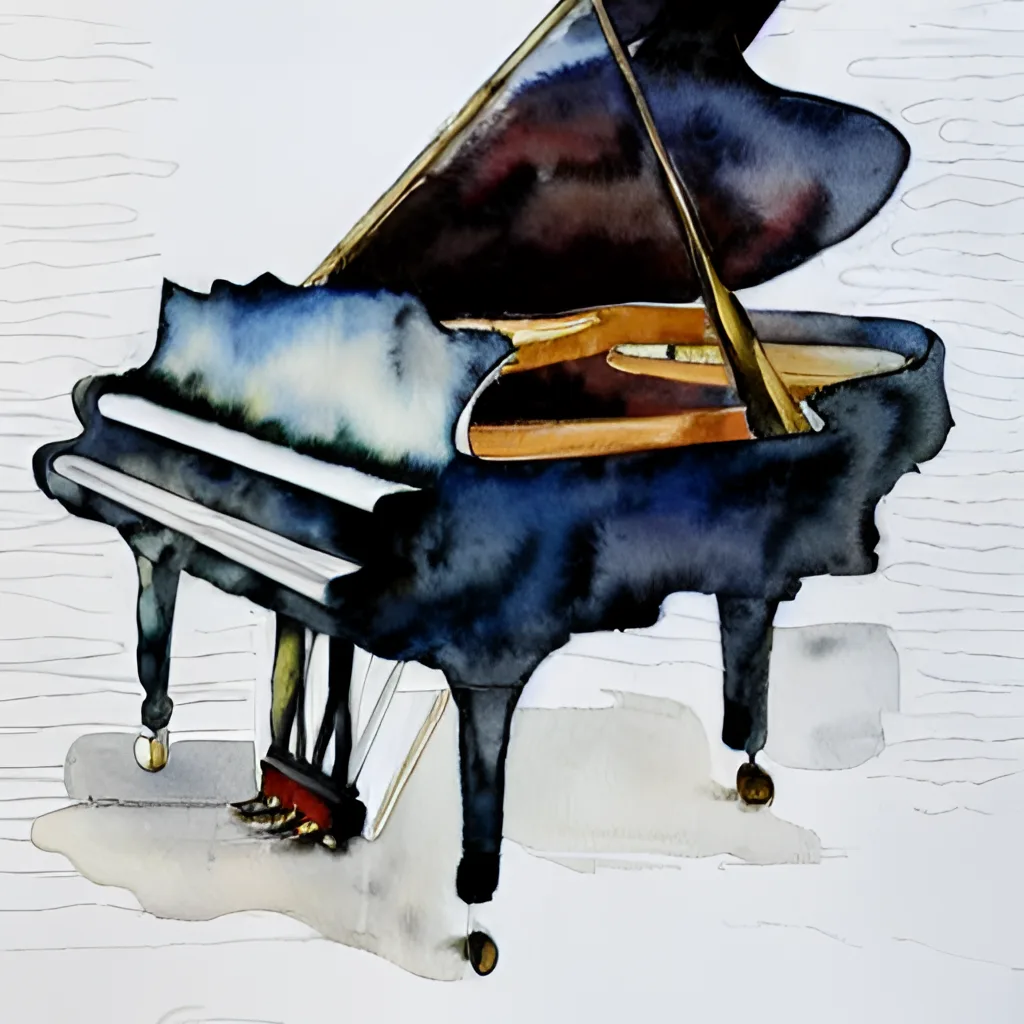
Playing Le Coucou on the Piano
This piece was originally written for the harpsichord, and today it is often played on the piano.
On the piano, make the sixteenth notes light and clear, as clean as the sound of a harpsichord.
You can use the pedal sparingly or not at all, to keep the sound from becoming blurred.
Who Was Daquin?
Daquin was born in 1694 and died in 1772, and was a French organist and composer.
He showed musical talent from childhood, and when he grew up he served as an organist in churches in Paris, and was famous for his improvisation.
Not much of his work has survived, and Le Coucou is one of the most widely known.
The Flowing Sixteenth Notes
Beyond the cuckoo's call, the right hand plays a run of light, continuous sixteenth notes.
These notes are like a breeze passing through a wood, or leaves swaying gently.
They should be played evenly and lightly, and must not cover the cuckoo's call.
You've read 28% of this article
Log in for free to read the remaining 72%
- Free to use
- No credit card needed
Plus, try Premium free for 7 days in the TIGA ALPHA app.
Continue with Google Sign up free Already a member? Log inLe Coucou Summary
Daquin was born in 1694 and died in 1772. He was a French composer who served as an organist in a Paris church and was known for improvising. In 1735 he published his first book of harpsichord pieces, in which Le Coucou is a rondeau in E minor, with a theme that keeps returning and different sections inserted between.
A falling third imitates the cuckoo's call, and the light, flowing sixteenth notes in the right hand are like a breeze. E minor has only one sharp, and the piece is light with a slightly misty feel. On the piano it should be light and clear with little pedal; the call figure must be heard and the flowing notes are the background; the wrist should be relaxed. It suits learners who can play continuous sixteenth notes, and you can also listen to it together with Rameau's La Poule (The Hen).
When playing, you can imagine a woodland in spring, and Teacher Aum can help you choose a suitable score.
The Collection of 1735
In 1735, Daquin published his first book of harpsichord pieces.
The collection contains many descriptive miniatures, and Le Coucou is one of them.
In France at that time, it was a popular way of writing to use music to depict birdsong, natural scenes and people's characters.
The Colour of E Minor
Le Coucou is in E minor, which has only one sharp: F♯.
Although it is in a minor key, the piece is not sad, but light with a slightly misty mood.
Before playing, you can practise the E minor scale and its main chords.
The Finger Skills Needed for Le Coucou
If your fingers can run through a line of sixteenth notes in one go, you can think about playing Le Coucou.
It is not long, but it needs evenness and agility in the fingers.
There are also some simplified versions, suitable for learners of a lower level.
Relaxing the Wrist
With sixteenth notes going on without a break, the hand easily becomes tense.
When playing, keep the wrist relaxed and the fingers close to the keys.
If you feel tired, you can stop and shake out your hands, then carry on practising.
Balance Between the Two Hands
When playing Le Coucou, pay attention to the balance between the two hands.
The cuckoo-call figure should be clearly heard, and the flowing notes are the background.
You can first practise the call figure on its own, and then put it together with the flowing notes.
The Cuckoo's Call
The cuckoo's call is two notes, one high and one low, "cuckoo, cuckoo".
Daquin imitates this call with a falling third, which returns again and again in the piece.
When listening, you can notice where this little figure appears, as if looking for the cuckoo in a wood.
Let Imagination Bring the Music to Life
When playing Le Coucou, you can imagine yourself taking a walk in a spring wood.
A breeze passes, and from far away comes the call of a cuckoo, now near, now far.
This kind of imagination can help you find the right tone colour and dynamic changes.
Birdsong in Baroque Music
In the Baroque period, many composers wrote music imitating birdsong.
For example, Rameau's La Poule (The Hen) uses a repeated figure to imitate a hen clucking.
You can listen to these pieces together and compare how composers depict animals in music.
Ask Your Teacher to Choose a Le Coucou Score in Lessons
If you want to play Le Coucou, you can ask Teacher Aum in lessons to choose a suitable score for your level.
Your teacher can also help you practise the balance between the hands and the evenness of the sixteenth notes.
Listen to this
This piece is very suitable for small performances or family gatherings.
FAQ
Q: In what year was Le Coucou published?
A: 1735.
Q: What key is it in?
A: E minor.
Q: What form is it?
A: A rondeau.
Q: What interval imitates the cuckoo's call?
A: A falling third.
Q: What should I pay attention to when playing it on the piano?
A: Keep the sixteenth notes light and clear, and use little pedal.
Start Practising with TIGA ALPHA
TIGA ALPHA is an AI piano teaching app built by a team in Thailand. The app is available in 10 languages: Thai, English, Chinese, Arabic, Japanese, Russian, Spanish, French, Hindi and Korean. Its CEO, Teacher Aum, has 20 years of experience teaching piano, and that teaching background shapes every lesson. When you play, the app listens and tells you which notes or beats to practise next, so the feedback is specific rather than generic. Use it as an online piano lessons app for short daily sessions, follow it as a complete online piano course, or combine it with lessons from a teacher. Whether you are starting from scratch, coming back after a long break, learning music alongside your children or simply playing for fun, your next step stays clear. New users get a 7-day free Premium trial, then US$24.99 per month.
- Download and start: TIGA ALPHA
- In-person lessons in Thailand: TIGA Studio
- About the company: tigaalpha.com