Do-Re-Mi: A Song Built from Solfege Syllables
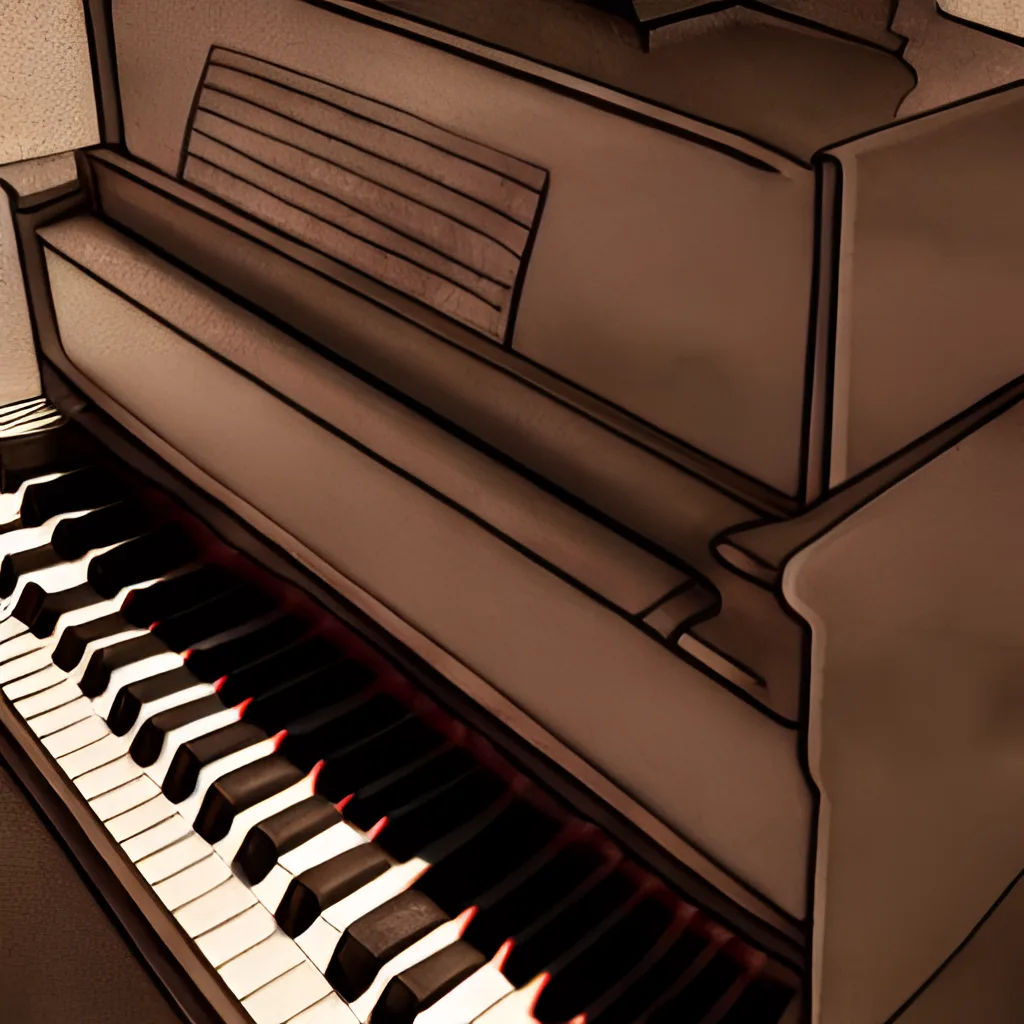
"Do-Re-Mi" is a song from the 1959 musical The Sound of Music, with music by Rodgers and lyrics by Hammerstein. In the show, the governess uses this song to teach the children the solfege syllables: starting from "do", they sing up one note at a time, and each syllable is given a memorable line of lyrics. In the second half of the song, the syllables are shuffled and recombined into a new melody. For piano learners, this song is a good helper for getting to know the major scale and solfege, and its simple melody is also very suitable for beginners to play.
Playing Do-Re-Mi on the piano
Beginners can start with the right hand from C, singing the syllables as they play.
Think again
Each time you play a note, sing its syllable, linking the sound with the name.
Once you are fluent, try playing the full melody of the song.
Singing it in another key
Once you can start from C, you can try playing the same melody starting from G.
Now do is G, and the scale is G, A, B, C, D, E, F♯, G, which needs one black key.
Sing it with movable-do syllables, and the feel of the melody stays the same, only the pitch changes.
What solfege is
Solfege is the set of names used to sing the notes of a scale, most commonly do, re, mi, fa, sol, la, si (or ti).
In fixed-do, do is always C; in movable-do, do is the tonic of each key.
"Do-Re-Mi" uses the movable-do idea, singing up one note at a time from the tonic.

A line of lyrics for each syllable
In the original English lyrics, each syllable is paired with a word that sounds similar, such as "deer" and "sun".
The Chinese version also has matching lyrics, to help children remember each syllable.
This method makes the abstract syllables concrete and easy to remember.
The song's scene in the show
In The Sound of Music, the new governess finds that the children cannot sing.
She takes the children up onto a hillside and starts teaching from the most basic syllables.
"Do-Re-Mi" is the song she uses to teach them, relaxed and fun.
You've read 30% of this article
Log in for free to read the remaining 70%
- Free to use
- No credit card needed
Plus, try Premium free for 7 days in the TIGA ALPHA app.
Continue with Google Sign up free Already a member? Log inSolfege and fingering
When the right hand goes up the scale from C, the thumb usually passes under the third finger after playing E and lands on F.
In the melody of "Do-Re-Mi" you can use similar fingering.
Once the fingering is steady, the melody will play more smoothly.
Adding the left hand to Do-Re-Mi
Once you know the melody, you can add a simple left hand, for example with the three chords C, F and G.
Change chord every bar or every two beats, choosing according to how the melody moves.
This helps beginners get to know the most basic chords.
- A song from the 1959 musical The Sound of Music
- Built from the solfege syllables "do-re-mi"
- A memorable line for each syllable
- Good for getting to know the major scale
Practising sight-singing with Do-Re-Mi
"Do-Re-Mi" is also good material for practising sight-singing.
You can first look at the score and sing the melody with the syllables, then play it on the piano and check whether you sang it correctly.
Practising this way over time improves both your reading and your ear.
Summary of Do-Re-Mi
"Do-Re-Mi" is the song in the 1959 musical The Sound of Music in which the governess teaches the children the solfege syllables, with music by Rodgers and lyrics by Hammerstein. The syllables are do, re, mi, fa, sol, la, si (or ti); in fixed-do, do is always C, while in movable-do, do is the tonic of each key, and the syllables can be traced back to the method of an Italian monk of the eleventh century.
Each syllable has a memorable line of lyrics. The first half goes up the major scale from do to high do, and the second half shuffles and recombines them into a new melody. On the piano you can start from C, singing as you play, with the right-hand thumb passing under on F; you can also move to G major, accompany with the left hand using the chords C, F and G, and use the song for sight-singing practice and solfege games.
For solfege practice, you can ask Teacher Aum to help with this song.
The scale from do to do
In the first half of the song, the melody goes up the major scale one note at a time, from do to high do.
On the piano, if you start from C, that is C, D, E, F, G, A, B, C, all white keys.
This is a perfect chance to get to know the C major scale.
Asking the teacher to use Do-Re-Mi for solfege in lessons
In a lesson you can ask Teacher Aum to use "Do-Re-Mi" to help you practise solfege and scales.
The teacher can also explain the difference between fixed-do and movable-do.
Starting from a fun song, you get to know the most basic things in music.
The history of solfege
The method of singing a scale with syllables can be traced back to medieval Europe.
It is said that an Italian monk of the eleventh century used the syllable at the start of each line of a hymn to help students remember pitches.
Later, these syllables gradually developed into today's do, re, mi.
Playing solfege games with children
Parents can sing "Do-Re-Mi" with their children, doing actions as they sing.
One person can also play a note while the other sings its syllable, to see who gets it right.
Little games like this let children learn solfege through play.
The shuffled syllables
In the second half of the song, the syllables are shuffled and recombined, for example "do mi mi, mi sol sol".
These combinations become a new melody, like a musical game.
Practice order
This shows that the same few notes, arranged differently, can become different melodies.
FAQ
Q: Which work is Do-Re-Mi from?
A: The 1959 musical The Sound of Music.
Q: What are the solfege syllables?
A: do, re, mi, fa, sol, la, si (or ti).
Q: What is do in movable-do?
A: The tonic of each key.
Q: On which note does the thumb pass under in the right-hand ascending scale?
A: F.
Q: Which black key does the scale starting on G need?
A: F♯.
Practise with TIGA ALPHA
TIGA ALPHA is an AI piano teaching app built by a team in Thailand. The app is available in 10 languages: Thai, English, Chinese, Arabic, Japanese, Russian, Spanish, French, Hindi and Korean. Its CEO, Teacher Aum, has 20 years of experience teaching piano, and that teaching background shapes every lesson. When you play, the app listens and tells you which notes or beats to practise next, so the feedback is specific rather than generic. Use it as an online piano lessons app for short daily sessions, follow it as a complete online piano course, or combine it with lessons from a teacher. Whether you are starting from scratch, coming back after a long break, learning music alongside your children or simply playing for fun, your next step stays clear. New users get a 7-day free Premium trial, then US$24.99 per month.
- Download and start: TIGA ALPHA
- In-person lessons in Thailand: TIGA Studio
- About the company: tigaalpha.com