Joplin's The Entertainer: A Ragtime Piece from 1902
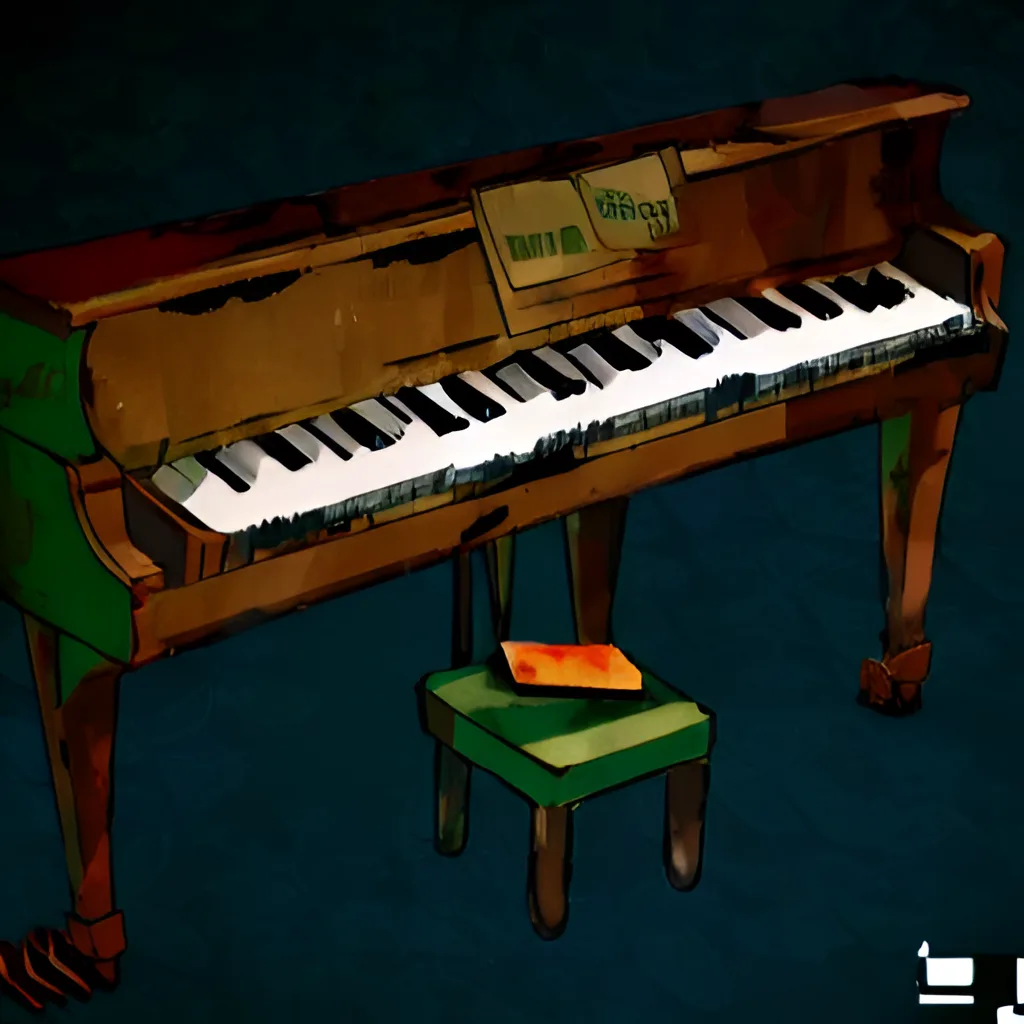
"The Entertainer" is a ragtime piano piece published by Scott Joplin in 1902, with the subtitle "A Ragtime Two-Step". The whole piece is in 2/4 time, with the left hand bouncing along, a bass note on one beat and a chord on the next, and the right-hand melody full of syncopation. The piece was already published in Joplin's lifetime, and in the 1970s, when a film used it as its soundtrack, it became familiar to many people again. The tempo marking on the score is "Not fast", and when playing it, steadiness matters more than speed.
Comparing with the Maple Leaf Rag
The "Maple Leaf Rag", which Joplin had published a few years earlier, is also a very famous ragtime work.
Both pieces have a bouncing left hand and a syncopated right hand, but the character of their melodies and sections is different.
You can listen to the two pieces and compare the difference in mood.
- A rag published in 1902
- Subtitle "A Ragtime Two-Step"
- Left-hand bass notes alternating with chords, syncopated melody in the right hand
- The score is marked "Not fast"

Go Easy on the Pedal
The bounce of the left hand in ragtime needs to be clear, and if you use too much pedal, the bass notes and chords will blur together.
In most of "The Entertainer", let your fingers play the notes cleanly by themselves, and touch the pedal only at the odd long note.
First get it comfortable without the pedal, and then decide where it is needed.
The Bounce of the Left Hand in The Entertainer
The left hand of this piece is doing almost the same thing all the time: playing a bass note on the strong beat, and jumping to the middle register to play a chord on the weak beat.
This bounce in the left hand is like the steps of a dance, and it is the foundation of ragtime.
In practice you can first practise the left hand alone, to get used to the distance between bass note and chord, looking ahead to the next position.
Choosing a Simplified Version
If the original is a struggle, some arrangements keep only the left-hand bass notes and leave out the chords in the middle register, which can serve as a stepping stone.
You've read 30% of this article
Log in for free to read the remaining 70%
- Free to use
- No credit card needed
Plus, try Premium free for 7 days in the TIGA ALPHA app.
Continue with Google Sign up free Already a member? Log inA simplified version can help you get to know the melody and the structure first.
Once you know them, you can gradually move on to the original writing.
The "Not Fast" Marking
Joplin wrote the tempo marking "Not fast" on the score.
Many people speed up as they play ragtime, but this makes the bounce of the left hand frantic and the syncopation loses its flavour.
Rather than aiming for fast hands, it is better to give the beat room, so that each syncopated note stands firmly.
Where the Difficulty Lies
The difficulty of this piece lies mainly in the coordination of the left-hand bounce with the right-hand syncopation.
Before putting the hands together, mark on the score between which left-hand beats each syncopated note falls.
Once you are fluent, speed up gradually, but never go beyond the unhurried tempo the score suggests.
The Structure of Several Sections
"The Entertainer" is like a string of small linked sections, each with its own tune, and some of them come round again unchanged.
On the score you can mark the sections with letters, such as A, B, C and D, and see clearly the order in which they appear.
Once you know the structure, you can finish the piece one section at a time in practice, and it is easier to memorise too.
The Entertainer in Summary
"The Entertainer" is a rag published by Joplin in 1902, with the subtitle "A Ragtime Two-Step", in 2/4 time.
The left hand bounces between bass notes and chords, and the right hand plays a syncopated melody.
The score is marked "Not fast": a steady, unhurried tempo matters more than speed, and the pedal should be used sparingly, so that every syncopation is clear.
Its Later Revival
In the early twentieth century ragtime was very popular, but as musical styles changed it was gradually played less.
In the 1970s, a film used "The Entertainer" as its soundtrack, and many people heard the piece again.
Since then, it has become one of the pieces that many piano learners want to learn.
The Year of Publication
"The Entertainer" was published in 1902, and is one of Scott Joplin's ragtime works.
The subtitle on the score reads "A Ragtime Two-Step", showing that it is linked to a popular dance step of the time.
Joplin wrote dozens of rags in his lifetime, and "The Entertainer" is one that is widely known today.
Counting in 2/4
This piece is in 2/4 time, with two beats in each bar and each beat a quarter note.
Because most of the notes are eighth notes and sixteenth notes, when counting you can divide each beat again into two halves or four parts.
Once you have counted the subdivided beats clearly, you are less likely to get the position of the syncopation wrong.
Dynamics in Ragtime
Ragtime does not need to be loud all the time, and the score also has dynamic markings such as piano and crescendo.
The bass notes in the left hand should be clear and the chords lighter, so that the right-hand melody floats on top.
When a section repeats, you can try playing it more softly the first time and louder the second, to create contrast.
The Right-Hand Syncopated Melody
The melody in the right hand has a lot of syncopation, with the accent often falling in the middle of the beat rather than at the start.
This syncopation contrasts with the steady bounce of the left hand, and produces the lively feel that is special to ragtime.
Common misconceptions
You can first count the beats while tapping out the right-hand rhythm, to confirm the position of each syncopated note.
FAQ
Q: When was "The Entertainer" published?
A: 1902.
Q: What is its subtitle?
A: "A Ragtime Two-Step".
Q: What is the left hand doing?
A: Playing a bass note on the strong beat and jumping to the middle register for a chord on the weak beat.
Q: How fast should it be?
A: The score is marked "Not fast", so an unhurried, steady tempo is enough.
Q: Why did it become popular again later?
A: It was used as the soundtrack of a film in the 1970s.
Start practising with TIGA ALPHA
TIGA ALPHA is an AI piano teaching app built by a team in Thailand. The app is available in 10 languages: Thai, English, Chinese, Arabic, Japanese, Russian, Spanish, French, Hindi and Korean. Its CEO, Teacher Aum, has 20 years of experience teaching piano, and that teaching background shapes every lesson. When you play, the app listens and tells you which notes or beats to practise next, so the feedback is specific rather than generic. Use it as an online piano lessons app for short daily sessions, follow it as a complete online piano course, or combine it with lessons from a teacher. Whether you are starting from scratch, coming back after a long break, learning music alongside your children or simply playing for fun, your next step stays clear. New users get a 7-day free Premium trial, then US$24.99 per month.
- Download and start: TIGA ALPHA
- In-person lessons in Thailand: TIGA Studio
- About the company: tigaalpha.com