Pärt's Für Alina (1976): Bells on Two Pages of Music
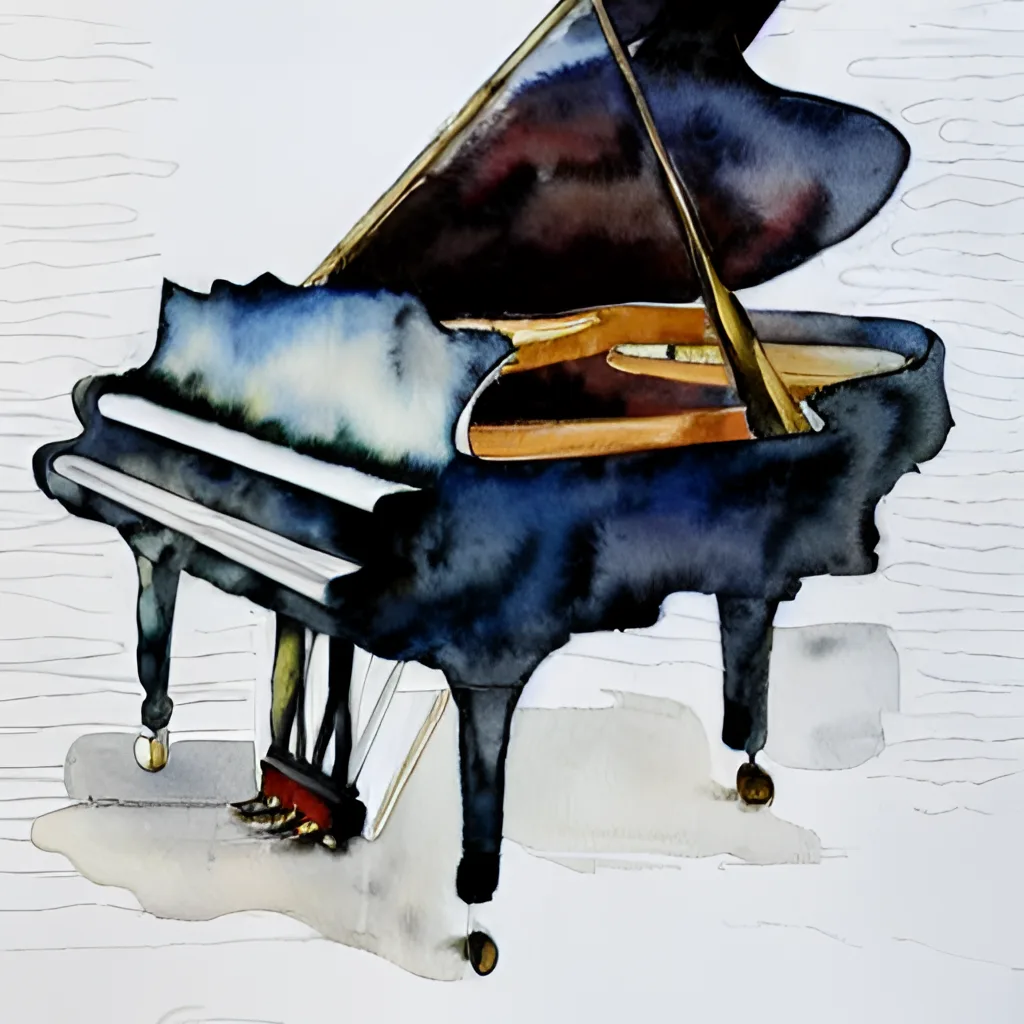
Für Alina is a short piano piece written in 1976 by the Estonian composer Arvo Pärt, and its score runs to just two pages. Before it, Pärt had spent several years publishing almost no new work, turning instead to the study of medieval and Renaissance music. This piece marks the beginning of a new style that he called "tintinnabuli": one voice moves through the melody step by step, while the other plays only notes of the tonic triad, like distant bells. The piece is very slow and very quiet, with few notes, yet it demands a great deal of listening and control.
What is the tintinnabuli style
The name "tintinnabuli" comes from the Latin word for "little bells".
Listen
Its basic method uses two voices: a melody voice that moves step by step along the scale, and another voice that plays only the three notes of the tonic triad.
Together, the two voices sound as if the melody is slowly unfolding in the ringing of bells.
Alina's B minor
The piece is in B minor, and the tonic triad is B, D and F♯.
The notes of the triad voice are always chosen from these three, taking the one closest to the melody.
This way, wherever the melody goes, the harmony always revolves around the same chord, which makes it feel very stable.
Für Alina in summary
Arvo Pärt was born in 1935 and is an Estonian composer. He used twelve-tone technique early in his career, then for several years in the early 1970s published almost nothing while studying Gregorian chant and medieval and Renaissance music. In 1976 he wrote Für Alina, only two pages long, reportedly for a girl from a friend's family who was about to move far away; the performance direction means roughly calm, sublime, listening inwards.
The piece marks the beginning of the tintinnabuli style, whose name comes from the Latin for little bell: one voice moves along the scale, the other plays only notes of the tonic triad. The piece is in B minor, with the tonic triad B, D and F♯. The score has no time signature and no bar lines. It begins with the left hand playing a low B octave with the pedal held down, and it is played very slowly and softly, with the sustain pedal down almost throughout. Pärt later wrote works such as Spiegel im Spiegel.
You've read 31% of this article
Log in for free to read the remaining 69%
- Free to use
- No credit card needed
Plus, try Premium free for 7 days in the TIGA ALPHA app.
Continue with Google Sign up free Already a member? Log inWhether your tone is even is something you can ask Teacher Aum to listen to.
Pärt's other tintinnabuli works
After this piece, Pärt wrote many works in the tintinnabuli style, such as Spiegel im Spiegel for violin and piano.
These works are equally simple and serene, and are popular all over the world.
They have given many people a new view of modern music.

Alina's pedal
The sustain pedal is held down almost throughout the piece, letting the sounds blend and resonate.
But because there are so few notes, the sound does not become muddy.
Try playing it on different pianos and listen for the difference the pedal makes.
The opening bass note
At the very start, the left hand plays a very low B octave, and the pedal is pressed so that it keeps ringing.
This low note is like the afterglow of a bell that has just been struck, enveloping the whole piece.
Every melody that follows unfolds within the resonance of this low note.
Asking your teacher to listen to your Alina
In a lesson, you can ask Teacher Aum to listen to your playing of this piece and tell you whether the tone is even and soft.
The teacher can also explain how the tintinnabuli style works, to help you understand the relationship between the two voices.
This piece is very good for practising listening and control.
Try it
- Written in 1976 by the Estonian composer Pärt
- The score is only two pages long
- Marks the beginning of the "tintinnabuli style"
- One voice carries the melody, the other plays only notes of the tonic triad
Difficulty in simplicity
The piece looks as if it has very few notes and is technically easy, but playing it well is not easy at all.
It requires very steady control of tone, and a sense of time and space.
You could say it tests your listening, not the speed of your fingers.
Who is Arvo Pärt
Arvo Pärt was born in 1935 and is an Estonian composer.
Early on he wrote works using modern methods such as twelve-tone technique.
Later, his style changed greatly and became very simple and serene.
Try writing a bit of tintinnabuli
You can try this at the piano: with the right hand, move step by step up a C major scale, and with the left hand play only whichever of C, E and G is closest to the right hand.
Play slowly and listen to how the two voices work together.
This is the most direct way to understand the tintinnabuli style.
A score with no time signature
The score of Für Alina has no time signature and no bar lines.
Most of the right-hand notes are not marked with fixed note values, so the player can decide how long each note lasts by feel.
This gives the player a lot of freedom, and also calls for strong listening skills.
Years of silence
In the early 1970s, Pärt became dissatisfied with the way he had been writing.
For several years he published almost no new work, and turned to studying Gregorian chant and medieval and Renaissance music.
The study and reflection of this period laid the foundation for his new style.
Playing very slowly and softly
The tempo of this piece is very slow, and the dynamics are very soft.
Each note should be played clearly and gently, and then you listen carefully as its sound slowly fades away.
Do not rush to the next note; wait until the sound is almost inaudible before continuing.
Written for Alina
The piece is said to have been written by Pärt for Alina, a girl from a friend's family, who was about to leave her homeland to live in England.
The quiet, gentle mood of the piece feels like a farewell and a blessing.
The performance direction Pärt wrote on the score means roughly "calm, sublime, listening inwards".
FAQ
Q: Who wrote Für Alina?
A: The Estonian composer Arvo Pärt.
Q: In which year was it written?
A: 1976.
Q: What is the tintinnabuli style?
A: One voice moves along the scale, and the other plays only notes of the tonic triad.
Q: What key is the piece in?
A: B minor.
Q: What is special about the score?
A: It has no time signature and no bar lines.
Start practising with TIGA ALPHA
To try an AI piano teaching app for yourself, take a look at TIGA ALPHA.
TIGA ALPHA is an AI piano teaching app built by a team in Thailand. The app is available in 10 languages: Thai, English, Chinese, Arabic, Japanese, Russian, Spanish, French, Hindi and Korean. Its CEO, Teacher Aum, has 20 years of experience teaching piano, and that teaching background shapes every lesson. When you play, the app listens and tells you which notes or beats to practise next, so the feedback is specific rather than generic. Use it as an online piano lessons app for short daily sessions, follow it as a complete online piano course, or combine it with lessons from a teacher. Whether you are starting from scratch, coming back after a long break, learning music alongside your children or simply playing for fun, your next step stays clear. New users get a 7-day free Premium trial, then US$24.99 per month.
- Download and start: TIGA ALPHA
- In-person lessons in Thailand: TIGA Studio
- About the company: tigaalpha.com