The Prepared Piano: After Objects Are Placed Between the Strings
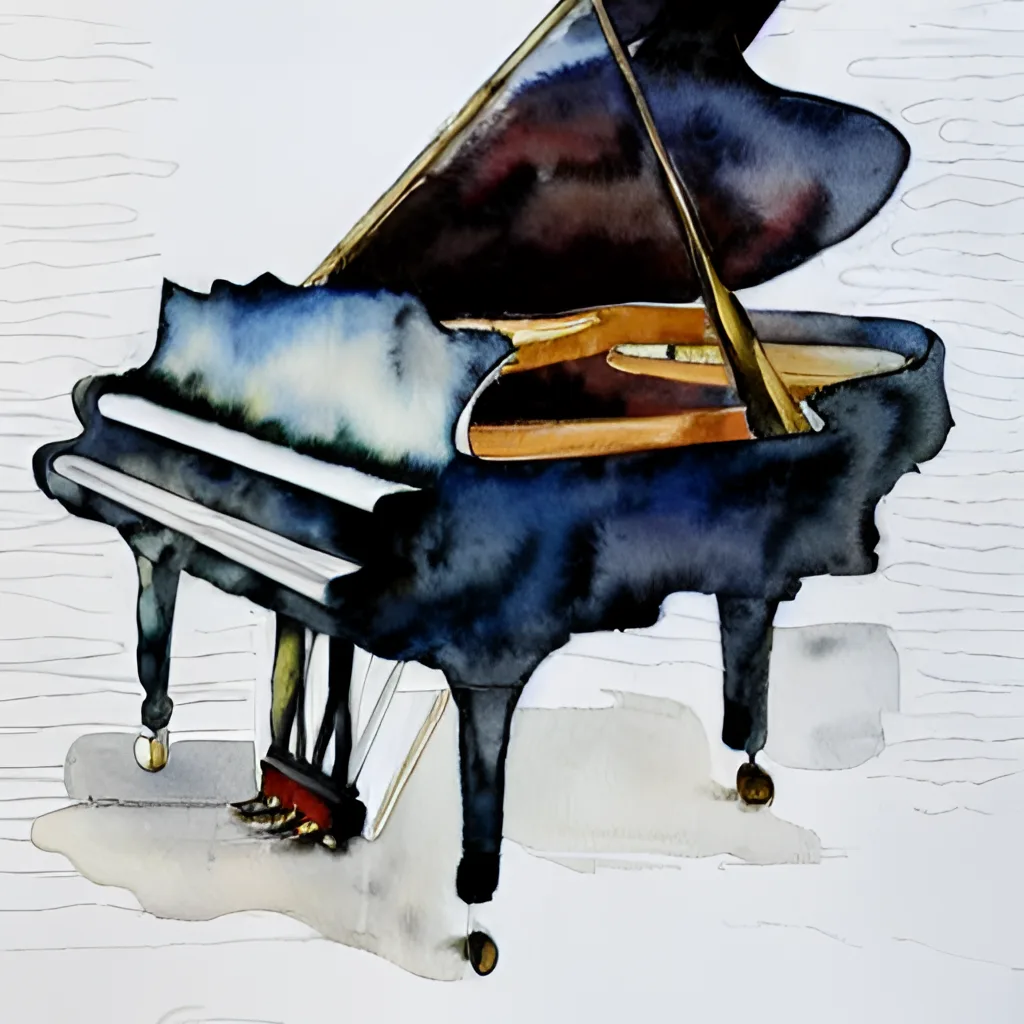
A prepared piano is a piano in which small objects are placed on the strings or wedged between them before the performance, changing the way the strings vibrate. The hammers strike the strings as usual, but because screws, rubber, felt or paper have been added, the piano's clear tone turns into a new sound with metallic clinks, muffled thuds or buzzing, sometimes closer to a set of percussion instruments. This practice became widely known around the 1940s through the works of the American composer John Cage, and has since remained a much-discussed way of exploring tone colour in modern music.
Why a Small Object Can Change the Sound
When a string sounds, the whole string vibrates in a complex way, producing a fundamental and many overtones at the same time. The piano tone we hear is the result of these components combined in certain proportions. Adding an object to a string changes its weight distribution, or blocks the vibration at some point.
What an object on the string does
- It adds local weight, making some overtones stronger or weaker.
- It blocks part of the vibration, making the sound shorter and duller.
- The object itself vibrates, producing extra clinking or buzzing.
- Placed at different positions, the same object can give different effects.
So a prepared piano is not simply "adding a bit of noise", but redesigning the tone colour of each note. The composer usually specifies the material, size and position of each object, and the performer prepares the piano according to the instructions.
Some Materials Often Discussed
In introductions to the prepared piano, the materials often mentioned include metal screws and nuts, rubber blocks, felt, plastic pieces and paper. Metal objects tend to give a bright, resonant sound; rubber and felt make the sound short and soft, a little like knocking on wood; a piece of paper on the strings may produce a faint rustling.
You've read 28% of this article
Log in for free to read the remaining 72%
- Free to use
- No credit card needed
Plus, try Premium free for 7 days in the TIGA ALPHA app.
Continue with Google Sign up free Already a member? Log inDifferent pianos have different string spacing and tension, so the same preparation may sound very different on two pianos. That is part of what makes the prepared piano interesting: every performance carries the individual character of that particular instrument.

Protecting the Piano Comes First
The prepared piano sounds very appealing, but it comes into direct contact with the strings and the internal mechanism, and mishandling can scratch the strings, damage the dampers, or even let objects fall into the action. If you want to try it, follow these principles:
- Get the piano owner's permission first, and for a piano at a school or practice room, ask the teacher beforehand.
- Use only materials that will not scratch the strings, and avoid sharp edges.
- Do not let objects fall into the gap between the hammers and the dampers.
- Remove everything right after the performance and check that nothing has been left behind.
- When children try it, a parent or teacher must be there to guide them.
You can start with an electronic experience
If you do not have a suitable piano, you can first listen to public recordings, or use electronic sounds to imitate similar effects. That lets you understand the changes in tone colour without putting a real instrument at risk.
The Role of the Prepared Piano in Compositions
In works for prepared piano, a single piano often takes on the role of a whole percussion section. Some keys in the low register may sound short and strong like drums, the middle register like wood blocks, and the high register like bells. A composer can therefore make richly layered rhythmic music with just one performer.
For the listener, the pleasure of this music lies in "the strange within the familiar": what you see is a piano, but what you hear is a completely different world of sound. It also makes you rethink where the boundaries of an instrument really lie.
What Piano Learners Can Take from It
The biggest inspiration of the prepared piano is that it makes us pay closer attention to tone colour. Even without putting anything on the strings, a player can change the sound through touch speed, weight and the pedal. In practice, you can pick one simple note, play it ten different ways, and compare each result carefully to build sensitivity to the details of sound.
What to Listen For
The first time you hear a recording of a prepared piano, the sound may feel very unfamiliar. You can try listening with a few questions in mind: which notes still keep the original piano character, and which have become like drums or wood blocks; how the same object sounds different in the high and low registers; and how the rhythm of the whole piece is organised by these new tone colours. After listening, go back to an ordinary piano and play a few notes, and you will have a new feeling for the piano's own sound. When parents and children listen together, you can also ask the child to describe in their own words what each sound is like, which is a good listening exercise.
FAQ
Q: Can a prepared piano damage the piano?
A: Done improperly, it can cause damage, so you must use safe materials, get permission beforehand, and remove every object completely after playing.
Q: Can an upright piano be prepared?
A: The strings of an upright are partly covered and there is little room to work, so it is generally not suitable; the usual practice is to do it on a grand piano.
Q: How is the music for a prepared piano notated?
A: A preparation chart is usually attached, showing which object goes where for each note, while the playing part still uses ordinary notation.
Q: Do beginners need to try it?
A: Not necessarily. At the beginner stage it is better to listen to recordings first and learn how much tone colour can change.
Start Practising with TIGA ALPHA
TIGA ALPHA is an AI piano teaching app built by a team in Thailand. The app is available in 10 languages: Thai, English, Chinese, Arabic, Japanese, Russian, Spanish, French, Hindi and Korean. Its CEO, Teacher Aum, has 20 years of experience teaching piano, and that teaching background shapes every lesson. When you play, the app listens and tells you which notes or beats to practise next, so the feedback is specific rather than generic. Use it as an online piano lessons app for short daily sessions, follow it as a complete online piano course, or combine it with lessons from a teacher. Whether you are starting from scratch, coming back after a long break, learning music alongside your children or simply playing for fun, your next step stays clear. New users get a 7-day free Premium trial, then US$24.99 per month.
- Download and start: TIGA ALPHA
- In-person lessons in Thailand: TIGA Studio
- About the company: tigaalpha.com
The prepared piano reminds us that an instrument's sound is not fixed, and that curiosity is itself part of music.