Stride Piano: The Oom-Pah Left Hand Explained
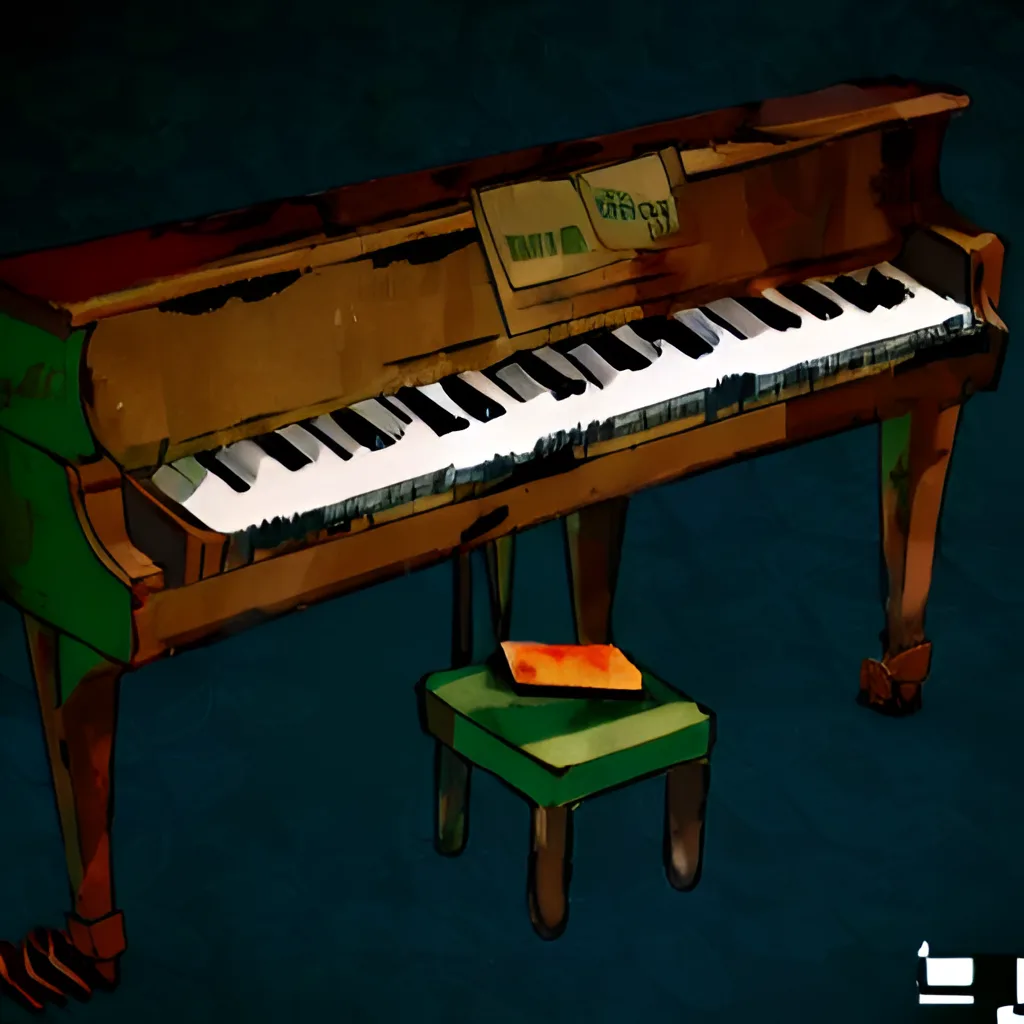
Stride is a piano style in which the left hand moves back and forth across the keyboard in a steady pattern. On the first and third beats it plays a single low note or an octave, and on the second and fourth beats it plays a chord near the centre of the keys. The right hand is free for melody and decoration. The result sounds like a small band: bass and rhythm section in the left hand, singer or soloist in the right.
The shape of the pattern
The left hand alternates between two places on the keyboard. Players often describe the sound with the words oom and pah.
- Oom: a low bass note or an octave, on beats one and three.
- Pah: a chord in the middle register, on beats two and four.
- The hand leaps between them in a steady rhythm.
The word stride comes from this long reach. The pattern needs the hand to learn the distance by feel, without looking at every jump.
Why learners find it satisfying
Stride gives a complete musical texture from only two hands. A beginner who can play a slow oom-pah pattern has a foundation for many songs, including march-like tunes and old dance pieces. It also trains skills that carry into other styles.
- Steady pulse, because the pattern depends on regular beats.
- Hand independence, as the left hand repeats while the right plays something different.
- Spatial sense, because the hand must find low notes and chords without staring at the keys.
- Chord knowledge, since the pah chords change with the harmony.
A gentle path in
Learn the pattern slowly and let the hand become comfortable before adding speed.
Start with one key
Choose a simple key such as C major. Play a low C, then a C major chord in the middle of the keyboard. Repeat slowly, counting one-two-three-four.
You've read 31% of this article
Log in for free to read the remaining 69%
- Free to use
- No credit card needed
Plus, try Premium free for 7 days in the TIGA ALPHA app.
Continue with Google Sign up free Already a member? Log inUse a smaller reach
If the octave is difficult, play a single bass note rather than an octave. Add the octave later as the hand grows used to it.
Add one change
Move to a second chord in the same pattern, for example from C to G. Notice that the bass note changes along with the chord.
Then add a simple tune
Let the right hand play a slow tune over the left-hand pattern. Stop whenever the pulse wavers and return to the left hand alone.
Common stumbles
- Rushing the jump, so that the left hand is early and uneven.
- Pressing too hard in the chord, which hides the melody.
- Tense shoulders from reaching, which tire the arm.
- Looking down at each leap and losing track of the music.
If tension builds, stop and shake out the arm. Slow practice and short sessions usually help more than pushing through.
Listening before playing
Before you try the pattern, listen to recordings of lively piano music from the early twentieth century and tap the beat. Notice how the low and middle notes alternate. If you can hear the oom and the pah separately, your hands will find it easier to follow.
Practice support
TIGA ALPHA is an AI piano teaching app built for the kind of repetition stride needs. It follows what you play, shows where the pulse started to wobble and helps you decide which bar to repeat. Used for a few minutes each day, it fits well with slow, careful work on a left-hand pattern.
A note on style and patience
Stride grew from lively dance music, and its sound is playful, so it is tempting to play fast right away. Resist that. A slow, clean pattern with a relaxed hand is the real foundation. Speed arrives later as a by-product of accuracy. Spend a few minutes each day on the left hand alone, and stop before tiredness shows. Many learners find that two short sessions in a day teach the leap better than one long session.
- Keep the thumb and little finger ready for the bass and chord positions.
- Let the wrist travel with the hand rather than forcing the reach from the shoulder.
- Count aloud for the first week so the beat stays in your body.
FAQ
Q: Is stride very hard for beginners?
A: The full style is advanced, but the basic oom-pah pattern can be learned slowly by a beginner.
Q: Do I need big hands?
A: Not at first. You can use single bass notes instead of octaves and build up gradually.
Q: Which hand should I practise first?
A: Start with the left hand alone, then add the right.
Q: How can I tell if my pulse is steady?
A: Record a short take and listen back, or use a slow metronome and check that each beat lands cleanly.
Get started with TIGA ALPHA
TIGA ALPHA is an AI piano teaching app built by a Thai team, with lessons in 10 languages: Thai, English, Mandarin, Arabic, Japanese, Russian, Spanish, French, Hindi and Korean. Its CEO, Teacher Aum, has 20 years of experience in piano teaching, and that music teaching background shapes every lesson, while piano teaching with AI gives you feedback each time you play piano. Use it as an online piano lessons app for short daily sessions, follow it as a complete AI online piano course, or combine it with a piano course or piano learning course led by a teacher. Whether you want to learn piano from zero, learn piano online after a long break, learn music alongside your children or simply play music for fun, this online piano teaching application keeps your next step clear. New users get a 7-day free Premium trial, then US$24.99/month. Open the piano teaching app below and pick a first lesson that fits your week.
- Download and start: TIGA ALPHA landing page
- In-person lessons in Thailand: TIGA Studio
- About the company: tigaalpha.com
Stride is a reminder that one hand can provide both the beat and the harmony, and still leave the other hand free to sing.