The Arabesque in Piano Music: Flowing Lines and Ornament
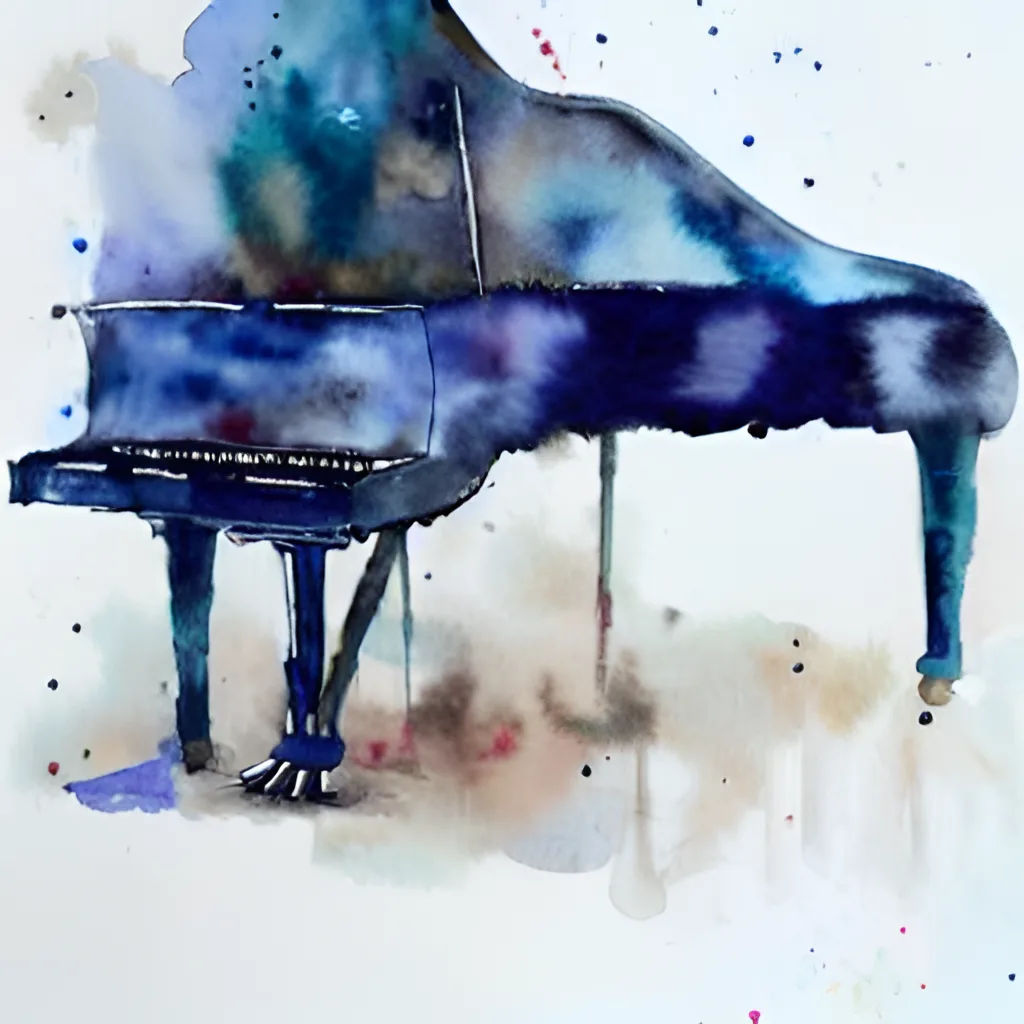
In visual art, an arabesque is an ornamental design of interlacing curves, vines and flowing patterns. Nineteenth-century composers borrowed the word for piano pieces that seem to trace similar shapes in sound: graceful, decorative lines that twist and unfold. An arabesque is not a strict form like a sonata or fugue; it is more of a character title, promising elegance, movement and ornament. Several well-loved arabesques are played by intermediate pianists around the world, and learning one is a lesson in lightness and flow.
The idea behind the title
The visual arabesque has no beginning or end; its patterns repeat and transform endlessly. Musical arabesques capture this with:
- continuous running figures, often in triplets or sixteenth notes
- melodies that curve up and down rather than move in straight lines
- ornamental decoration around a simple harmonic core
- a sense of motion that rarely stops completely
Composers such as Robert Schumann and, later, the French composer Debussy wrote piano arabesques, each with its own style, from Romantic warmth to shimmering impressionist colour.
Playing flowing figures
The running patterns in an arabesque should sound effortless. Achieving that takes careful work.
Group the notes
Instead of thinking of every note separately, group them into shapes of three, four or six. Practise each group as a single gesture, pausing briefly at the end of each before linking them together.
Use the wrist
Let the wrist rise and fall gently with the shape of the line. A rigid wrist makes arpeggios uneven and tiring.
Keep the fingers close
Play from the surface of the keys, with minimal lifting, so the line stays smooth and quiet.
You've read 30% of this article
Log in for free to read the remaining 70%
- Free to use
- No credit card needed
Plus, try Premium free for 7 days in the TIGA ALPHA app.
Continue with Google Sign up free Already a member? Log in
Melody within the patterns
Many arabesques hide a melody inside the flowing figures, sometimes in the top notes, sometimes in the bass or in the thumb. Find these notes by playing the passage slowly and listening for which ones form a tune. Mark them in pencil, then bring them out slightly while keeping the surrounding notes soft. This layering is what gives the music its depth. Recording the passage and listening back is a quick way to check whether the hidden tune can really be heard, or whether it is still buried in the texture.
Pedalling the patterns
Arabesques often call for generous pedal to blend the harmonies, but too much pedal turns the patterns into a blur. Change the pedal with each harmony, and consider using half or flutter pedalling in faster passages. In impressionist arabesques, slight blending of harmonies can be part of the colour; in Romantic ones, clarity of the bass line often matters more. Listen and adjust.
Rhythm and rubato
Because arabesques feel free, it is tempting to stretch the tempo constantly. A little rubato adds grace, but the underlying pulse must remain. One helpful image is a steady bass that acts like a frame, with the upper line floating freely inside it. Practise with a metronome first, then allow small flexibilities at phrase ends.
Triplets against duplets
Some arabesques combine triplets in one hand with eighth notes in the other, creating a rhythm of three against two. Practise this slowly by tapping the pattern on a table, saying "nice cup of tea" to feel where the notes fall. Then play it on the keys, starting with simple chords before adding the real notes.
Why arabesques suit intermediate players
Arabesques build valuable skills for later repertoire: smooth arpeggios, balance between melody and accompaniment, controlled pedal and flexible rhythm. They are long enough to develop a musical narrative, but short enough to learn in a reasonable time. They also sound impressive for their level, which makes them popular in recitals and exams.
Learners practising with TIGA ALPHA can check the evenness of running notes and see whether any beats are rushed, which is especially helpful for the continuous patterns that make an arabesque flow.
FAQ
Q: Is an arabesque a fixed musical form?
A: No. It is a character title describing decorative, flowing music rather than a strict structure.
Q: What level are piano arabesques?
A: Several popular ones are intermediate, though some are more advanced.
Q: How do I make the running notes even?
A: Group the notes into gestures, use a flexible wrist and practise slowly with a metronome before adding speed.
Q: How much pedal should I use?
A: Enough to connect harmonies, changing with each chord, while keeping the patterns clear.
Get started with TIGA ALPHA
TIGA ALPHA is an AI piano teaching app built by a Thai team, with lessons in 10 languages: Thai, English, Mandarin, Arabic, Japanese, Russian, Spanish, French, Hindi and Korean. Its CEO, Teacher Aum, has 20 years of experience in piano teaching, and that music teaching background shapes every lesson, while piano teaching with AI gives you feedback each time you play piano. Use it as an online piano lessons app for short daily sessions, follow it as a complete AI online piano course, or combine it with a piano course or piano learning course led by a teacher. Whether you want to learn piano from zero, learn piano online after a long break, learn music alongside your children or simply play music for fun, this online piano teaching application keeps your next step clear. New users get a 7-day free Premium trial, then US$24.99/month. Open the piano teaching app below and pick a first lesson that fits your week.
- Download and start: TIGA ALPHA landing page
- In-person lessons in Thailand: TIGA Studio
- About the company: tigaalpha.com
An arabesque rewards a light hand and a long view: when the patterns flow without effort, the listener hears a single curving line rather than many notes.