Silent Key Presses: Feeling the Depth of the Keys
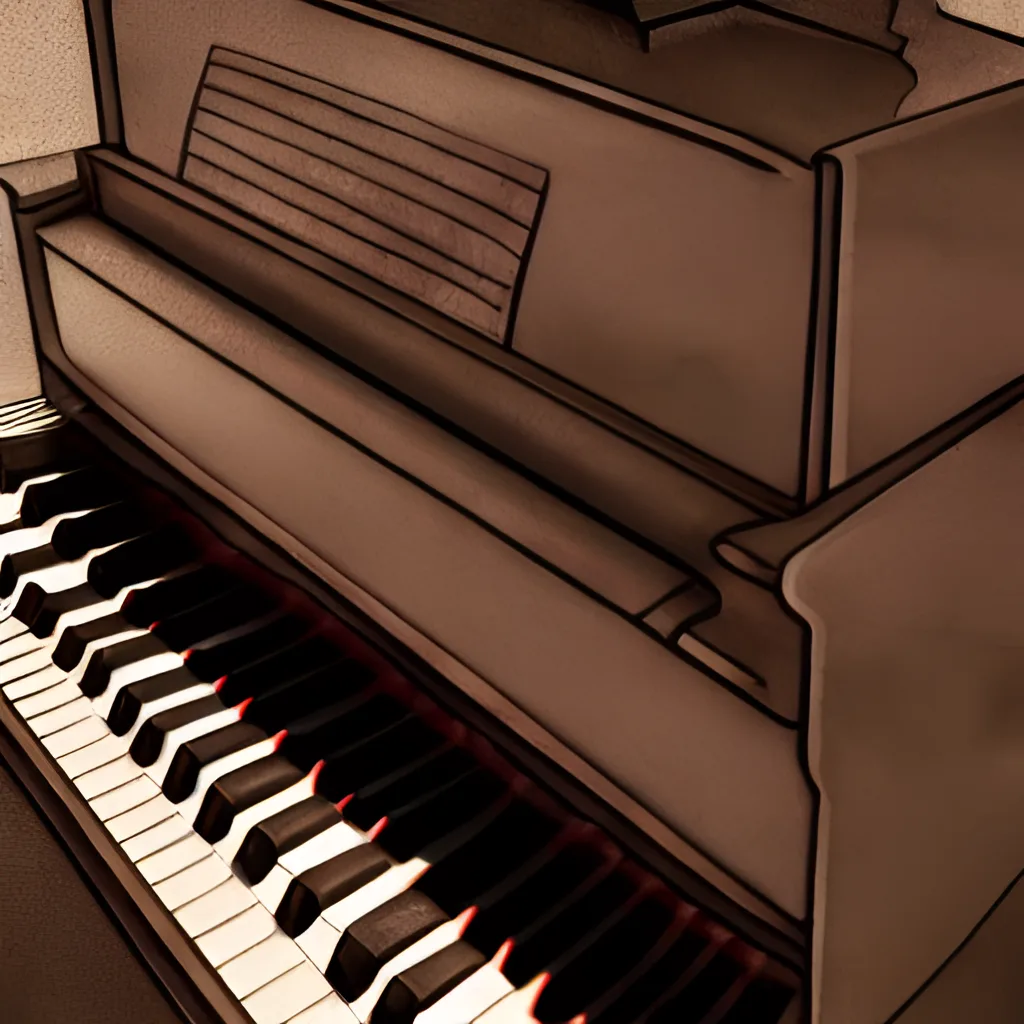
A silent key press means pressing a key down slowly, all the way to the bottom, without letting it sound, or letting it sound only very quietly. This helps you feel the distance and resistance of the key from top to bottom, find the point where the sound begins to appear, and so control soft playing and the details of touch better. The exercise is quiet, so it suits times of day when you need to keep the noise down.
Combining it with relaxed fingers
When doing silent key presses, keep your fingers, wrist and arm relaxed, and use only the movement needed to press the key.
Try it
If you notice tension in your wrist or shoulder, stop first, relax, and then carry on.
When you are relaxed, you can feel the key's feedback in more detail, and your control becomes more precise.
The difference on a digital piano
The keys of a digital piano are built differently from those of an acoustic piano. On some digital pianos, even a very slow press still produces a sound of some volume, or no sound at all.
On a digital piano you can mainly feel the depth and resistance of the keys, and how different speeds change the volume.
If you get the chance to practise on an acoustic piano, you can compare the difference in feel between the two.
Before you start
- Press the key down very slowly and feel it sinking
- Find the position where the sound begins to appear
- Compare the sound of key presses at different speeds
- Suited to short sessions at quiet times of day

Using it in pieces
When playing a very quiet passage in a piece, you can first use silent key presses to get used to the finger positions and movements, and then slowly add sound.
For melody notes that need to be joined softly, this exercise helps you control the start of each note and makes the melody more connected.
You've read 29% of this article
Log in for free to read the remaining 71%
- Free to use
- No credit card needed
Plus, try Premium free for 7 days in the TIGA ALPHA app.
Continue with Google Sign up free Already a member? Log inIn some chords only one note needs to stand out while the others are played very softly, and you can also use this method to practise differences in weight between the fingers.
How a key makes a sound
On an acoustic piano, when you press a key, the action inside pushes a hammer towards the string. The speed of the key press determines the speed at which the hammer strikes the string, and therefore the loudness of the sound.
If you press very slowly, the hammer may not reach the string, or may produce only an extremely quiet sound.
Understanding this principle shows why, when playing softly, controlling the speed of the key press matters more than how much "force" you use.
Comparing different speeds of touch
On the same key, press at three speeds, slow, medium and fast, and listen to how the loudness and tone differ.
A slow press gives a soft sound, and a fast press gives a loud, bright one.
This comparison helps you build the link between speed and volume, so that your dynamic changes have more shades.
The basic method
Place a finger on a key and press down very, very slowly, all the way to the bottom, feeling the whole process of the key sinking.
You may feel a place along the way where the resistance changes slightly, which is related to the mechanism inside the key.
Once at the bottom, hold it for a moment, then release slowly and feel the key rising back.
To begin with, you can choose a white key in the middle register, since keys there are easier to control. When you are used to it, try black keys and other registers.
Each key may feel a little different, so try several and notice the subtle differences between them.
Finding the point where the sound appears
Try several times, gradually speeding up the key press a little, until the key produces a very quiet sound just barely.
That speed, at which the key only just sounds, is one of the softest notes you can play.
Once you know the feeling, when you play a passage that needs to be very quiet, your fingers will know roughly what speed of touch to use.
A good choice for quiet times
The exercise itself makes very little sound, so it suits early morning, late at night, or times when the family is resting.
It can serve as a warm-up before practice, helping you focus your attention on the feeling in your fingertips.
A few minutes each time is enough. It does not need to be long.
Think about it
On a quiet morning, you can combine this exercise with scales: play a scale slowly at the quietest level, with each note only just sounding.
Frequently asked questions
Q: Can silent key presses damage the piano?
A: Pressing and releasing the keys slowly in the normal way will not damage the piano.
Q: How long should I practise each day?
A: A few minutes is enough, as a warm-up.
Q: Is this exercise suitable for children?
A: Yes. You can turn it into a little game of "who can press the most quietly".
Q: Can I do it on a digital piano?
A: You can feel the depth of the keys, but whether it sounds depends on the instrument.
Q: What is the change in resistance halfway down?
A: It is related to the structure of the action inside the key, and is normal.
Q: Does this exercise help with soft playing?
A: Yes. It helps you get used to the speed needed for a gentle touch, which helps you control soft dynamics.
Start practising with TIGA ALPHA
TIGA ALPHA is an AI piano teaching app built by a team in Thailand. The app is available in 10 languages: Thai, English, Chinese, Arabic, Japanese, Russian, Spanish, French, Hindi and Korean. Its CEO, Teacher Aum, has 20 years of experience teaching piano, and that teaching background shapes every lesson. When you play, the app listens and tells you which notes or beats to practise next, so the feedback is specific rather than generic. Use it as an online piano lessons app for short daily sessions, follow it as a complete online piano course, or combine it with lessons from a teacher. Whether you are starting from scratch, coming back after a long break, learning music alongside your children or simply playing for fun, your next step stays clear. New users get a 7-day free Premium trial, then US$24.99 per month.
- Download and start: TIGA ALPHA
- In-person lessons in Thailand: TIGA Studio
- About the company: tigaalpha.com