The Landini Cadence: Stepping Down Before the Final Note

The Landini cadence is a common way of ending a phrase in fourteenth- and fifteenth-century polyphonic music. Before reaching the final note, the top voice does not rise directly from the leading note to the tonic. Instead it first steps down from the leading note to the sixth degree, then leaps up a third to the tonic. For example, in a phrase ending on C, the melody goes "ti, la, do" instead of "ti, do". It is named after Francesco Landini, a fourteenth-century composer and organist from Florence, Italy, because he often used this ending in his works, but many composers of the same period used it too.
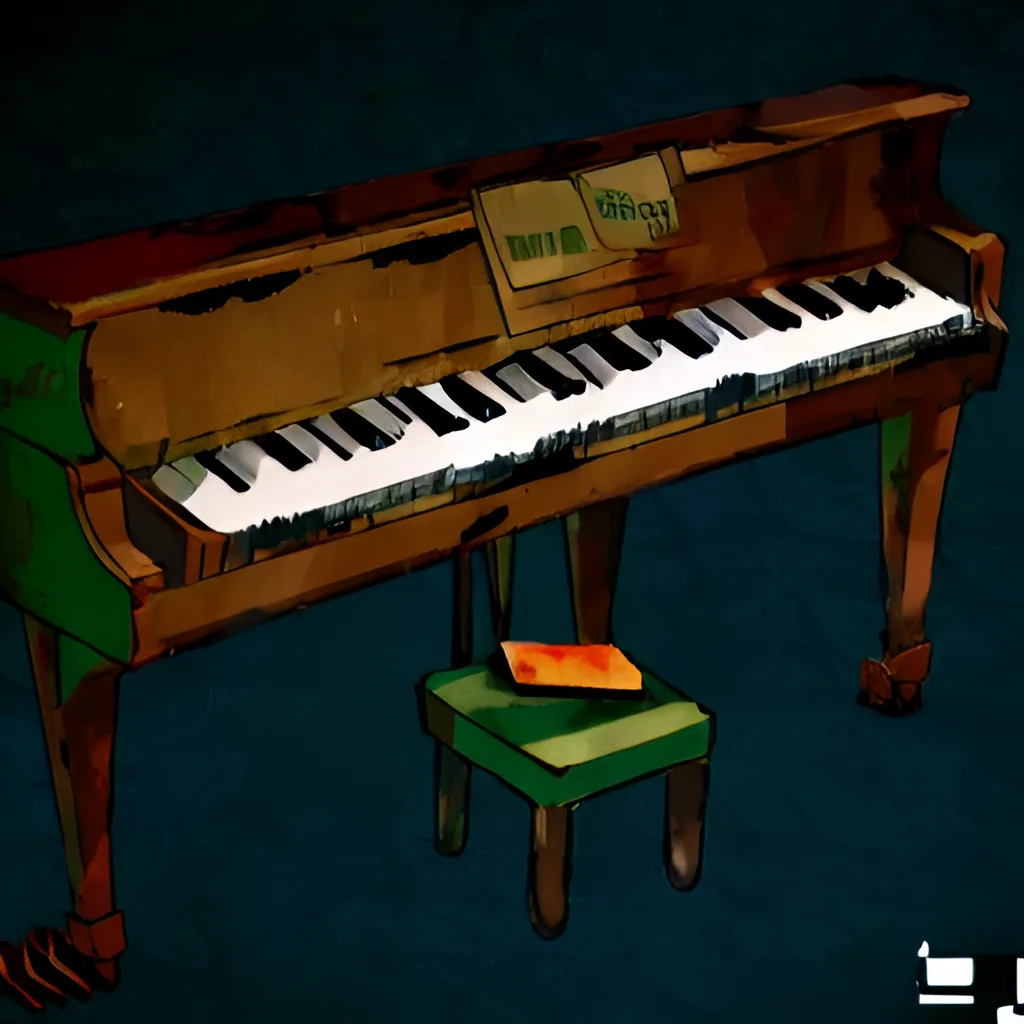
Playing the Landini cadence at the piano
At the piano you can play "ti, la, do" with your right hand and "re, do" with your left hand at the same time.
Play slowly at first and listen to how the two voices open out from a sixth to an octave.
Then compare it with an ending that goes straight from "ti" to "do".
Listening to medieval songs
You can find recordings of fourteenth-century Italian songs and listen to the ending of each phrase.
In many phrases you will hear this step down, "ti, la, do".
After listening a lot, you will quickly learn to recognise the Landini cadence.
A softer ending
Because it first steps down, the Landini cadence sounds softer than a direct resolution of the leading note.
It has a graceful, gently winding flavour.
This flavour is common in fourteenth-century Italian songs.
Not his invention
Although the Landini cadence is named after Landini, he did not invent it alone.
In the fourteenth and fifteenth centuries, composers in Italy, France and elsewhere often used this ending.
It was named after him only because later generations often saw it in Landini’s works.
Who was Landini
Francesco Landini was a fourteenth-century composer, poet and organist from Florence, Italy.
He left around one hundred and fifty secular songs, most of them ballatas for two or three voices.
He was famous in his own time and is regarded as one of the representative figures of fourteenth-century Italian music.
You've read 30% of this article
Log in for free to read the remaining 70%
- Free to use
- No credit card needed
Plus, try Premium free for 7 days in the TIGA ALPHA app.
Continue with Google Sign up free Already a member? Log inLandini cadence summary
The Landini cadence is a common phrase ending in fourteenth- and fifteenth-century polyphony. The top voice steps down from the leading note to the sixth degree and then leaps up a third to the tonic, for example "ti, la, do", while the lower voice goes from "re" to "do" at the same time, so the two voices open out from a sixth to an octave. It is named after Francesco Landini, the Florentine composer, poet and organist who left about one hundred and fifty secular songs, but many composers of his time used it.
It is softer and more winding than a direct leading-note resolution, and in the late fifteenth century it was gradually replaced by the perfect cadence, with the bass moving from dominant to tonic. At the piano you can play "ti, la, do" with the right hand and "re, do" with the left, or you can write a short melody that ends with it.
You can ask Teacher Aum to demonstrate the Landini cadence.
Later changes
By the late fifteenth century, the Landini cadence was used less and less.
Composers increasingly used the cadence with the bass moving from dominant to tonic, which later became the perfect cadence.
But in some later music you can still occasionally hear this stepping-down ending.
Putting it into a short melody
You can write a short four-bar melody yourself and end the last bar with a Landini cadence.
For example, "mi, re, do, re, mi, re, ti, la, do".
Play it a few times and feel the flavour this winding ending gives the melody.
What is a cadence
In music, a cadence is the way harmony and melody move at the end of a phrase or piece.
It is like the tone of voice at the end of a sentence, letting people know the sentence is finished.
Different periods have different common cadences.
Stepping down first
What makes the Landini cadence special is that after the leading note, the melody does not rise straight to the tonic.
It first steps down to the sixth degree, then leaps up a third to the tonic.
That is "ti, la, do", as if taking a small detour before arriving.
Trying the Landini cadence with your teacher in a lesson
In a lesson you can ask Teacher Aum to demonstrate the Landini cadence and how it differs from the later perfect cadence.
You can also play a short melody you have written for your teacher and see whether the cadence sounds natural.
From one small detour, you can hear the elegance of the Middle Ages.
Leading note to tonic
In a lot of music, before a phrase ends, the melody often rises a semitone from the leading note to the tonic.
For example, in C major, it goes from "ti" to "do".
The leading note is only a semitone below the tonic and has a strong feeling of wanting to rise.
- A common phrase ending in the fourteenth and fifteenth centuries
- The top voice steps down from the leading note to the sixth degree, then leaps to the tonic
- Named after the Florentine composer Landini
- Many composers of the same period used it too
Working with the lower voice
In the Landini cadence, while the top voice goes "ti, la, do", the lower voice usually goes down from "re" to "do".
The two voices expand from a sixth to an octave, creating an ending that opens outwards.
Summary
This is a very typical cadence in medieval polyphony.
Frequently asked questions
Q: How does the top voice move in the Landini cadence?
A: It steps down from the leading note to the sixth degree, then leaps up a third to the tonic.
Q: What is the melody in a phrase ending on C?
A: "Ti, la, do".
Q: Who is it named after?
A: Francesco Landini, a fourteenth-century composer from Florence.
Q: Did Landini invent it alone?
A: No, many composers of the same period used it.
Q: How do the two voices change at the ending?
A: They open out from a sixth to an octave.
Start practising with TIGA ALPHA
TIGA ALPHA is an AI piano teaching app built by a team in Thailand. The app is available in 10 languages: Thai, English, Chinese, Arabic, Japanese, Russian, Spanish, French, Hindi and Korean. Its CEO, Teacher Aum, has 20 years of experience teaching piano, and that teaching background shapes every lesson. When you play, the app listens and tells you which notes or beats to practise next, so the feedback is specific rather than generic. Use it as an online piano lessons app for short daily sessions, follow it as a complete online piano course, or combine it with lessons from a teacher. Whether you are starting from scratch, coming back after a long break, learning music alongside your children or simply playing for fun, your next step stays clear. New users get a 7-day free Premium trial, then US$24.99 per month.
- Download and start: TIGA ALPHA
- In-person lessons in Thailand: TIGA Studio
- About the company: tigaalpha.com