From Low to High: Moving Across the Piano's Wide Range
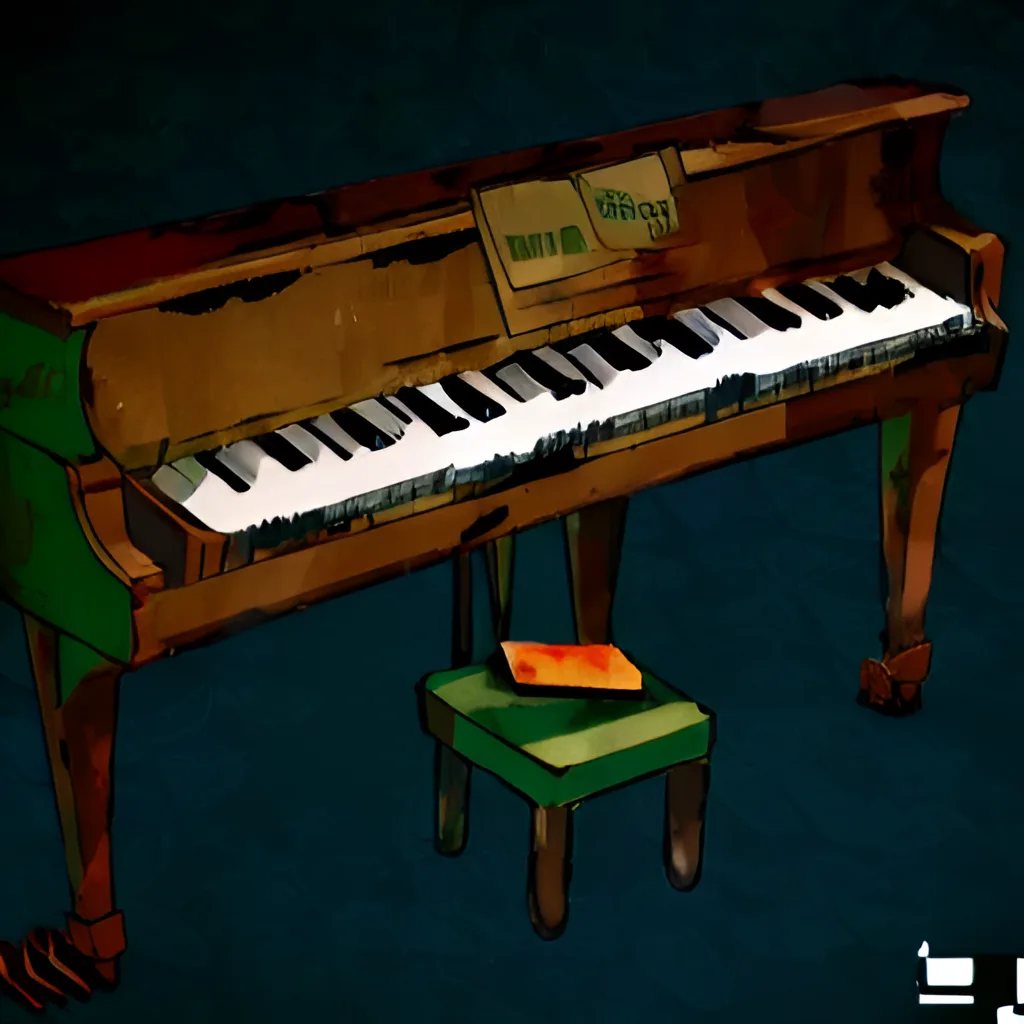
Range is the span from the lowest note to the highest. The piano's range is very wide, from the lowest notes on the far left to the highest notes on the far right, covering more than seven octaves. Composers often use the distance between the high and low registers to create a sense of open, grand space. When playing this kind of piece, you need to know where the two ends of the keyboard are and keep your body balanced.
The Tone of Different Registers
The low register of the piano sounds full and resonant, and suits a steady or dramatic feeling; the middle register is warm and close to the human voice, and is where melodies often lie; the high register is clear and light, and is often used for bright or sparkling effects.
When your two hands play at opposite ends of the keyboard, you can shift your weight slightly so that your arms extend naturally, rather than hunching your shoulders and pulling them over. Sitting in the middle of the stool and keeping your back relaxed helps control.
When practising big leaps, you can first glance at the target position and then let your hand move there. Once you are familiar with it, gradually look at the keyboard less and let your arm remember the distance.
In everyday practice, play plenty of scales and arpeggios across several octaves to help you get to know the whole range of the keyboard.
Using the Contrast Between Registers
Composers often use the contrast between registers to express the music. For example, a melody in the high register sounds bright and light; in the low register it sounds deep and heavy.
When the hands are far apart, they create a sense of open space; when the hands are close together, the sound is more concentrated.
When playing, you can notice these changes of register and adjust your tone accordingly.
Notes in the low register resonate a lot, so you can control the dynamic slightly to avoid a muddy sound; notes in the high register are shorter, so you can use a clearer touch.
You've read 29% of this article
Log in for free to read the remaining 71%
- Free to use
- No credit card needed
Plus, try Premium free for 7 days in the TIGA ALPHA app.
Continue with Google Sign up free Already a member? Log inUnderstanding the character of each register makes your playing richer and more colourful.
You can also play plenty of scales and arpeggios that span several octaves, to get to know the whole keyboard and make your hands move more naturally between registers.
Body Position and Balance
Sitting in the middle of the stool, facing the area around middle C, is the right position for most pieces. If a piece lies mainly in the high or low register, you can adjust where you sit slightly.
When both hands need to move to opposite ends of the keyboard, your upper body can lean slightly to one side with the arms, but your centre of gravity should stay stable, with both feet flat on the floor to support your body.
Do not hunch your shoulders or twist your body to reach distant keys, as this easily causes tension.
If the distance is too great, you can lean slightly forward or back to find a comfortable position.
Keeping your body balanced lets your arms move freely.
Before practising, you can sit properly, stretch each hand towards the lowest and highest notes you are about to play, and feel how your body needs to adjust before you start playing.
Getting to Know the Range of the Keyboard
A standard piano has eighty-eight keys, from the lowest A to the highest C, covering more than seven octaves. It is one of the instruments with a wider range.
When you are starting out, most pieces are concentrated in a few octaves around middle C and rarely use the two ends of the keyboard. As pieces get harder, the range gets wider too.
To get to know the whole keyboard, start by recognising every C. There are eight Cs on the keyboard, and you can find them one by one from left to right and number them.
You can also play the same melody in different octaves, listening to how the tone changes and feeling the character of each register.
In this way, the keyboard is no longer an unfamiliar territory but a familiar space.
- Range means the span from the lowest note to the highest
- A standard piano has eighty-eight keys
- Different registers have different tonal characters
- Keep your body balanced when your hands are far apart

Practising Big Leaps
When a piece has a big leap, your hand has to travel a long distance in a very short time. This is where many learners find things difficult.
You can first practise the movement itself: move quickly from one note to the target note without sounding it, just placing your hand on the target position to check the distance.
Once you are familiar with it, add the playing, slowly first and then faster.
As you move, let your arm carry your hand with it, rather than reaching only with your fingers. Keep your wrist flexible and your shoulders relaxed.
Common misconception
Your eyes can look ahead to the target position, but once you are fluent, gradually rely less on sight and let your arm remember the distance.
FAQ
Q: What are the lowest and highest notes on the piano?
A: On a standard piano the lowest note is A0 and the highest is C8.
Q: My shoulders get tight when my hands are far apart. What should I do?
A: Adjust where you sit and your centre of gravity, practise slowly first, and relax your shoulders before you play.
Q: Why are notes in the high register shorter?
A: The strings in the high register are shorter and their vibration lasts for less time, so the sound dies away faster.
Q: How many octaves does the piano have in total?
A: A standard piano has eighty-eight keys, covering more than seven octaves.
Q: What if I keep getting big leaps wrong?
A: You can first practise only the movement without sounding the notes, and add the playing once you know the distance.
Q: Should I sit over to the right when playing in the high register?
A: You can adjust slightly, but generally stay in the middle and use a lean of the upper body to help.
Start Practising with TIGA ALPHA
TIGA ALPHA is an AI piano teaching app built by a team in Thailand. The app is available in 10 languages: Thai, English, Chinese, Arabic, Japanese, Russian, Spanish, French, Hindi and Korean. Its CEO, Teacher Aum, has 20 years of experience teaching piano, and that teaching background shapes every lesson. When you play, the app listens and tells you which notes or beats to practise next, so the feedback is specific rather than generic. Use it as an online piano lessons app for short daily sessions, follow it as a complete online piano course, or combine it with lessons from a teacher. Whether you are starting from scratch, coming back after a long break, learning music alongside your children or simply playing for fun, your next step stays clear. New users get a 7-day free Premium trial, then US$24.99 per month.
- Download and start: TIGA ALPHA
- In-person lessons in Thailand: TIGA Studio
- About the company: tigaalpha.com