Polytonality: Music in Two Keys at Once
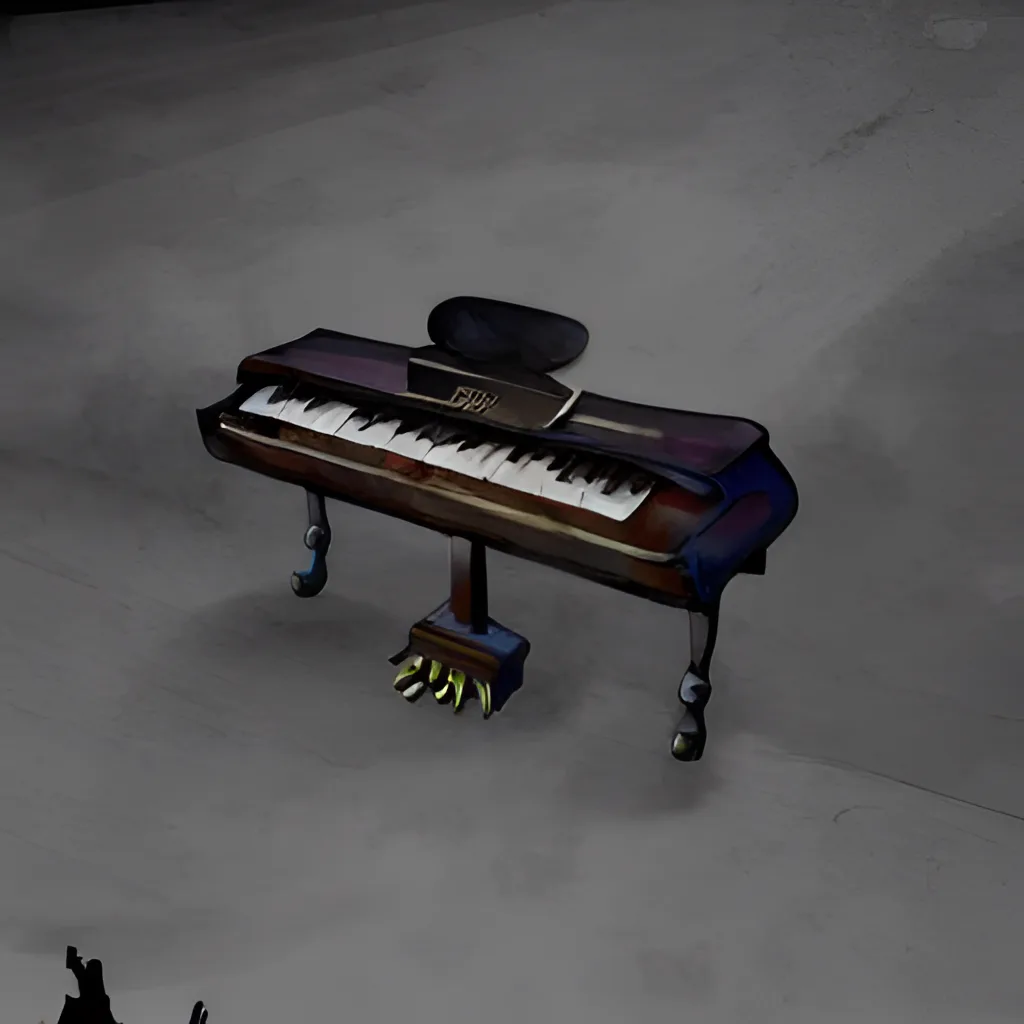
Polytonality means that in the same stretch of music, two or more different keys sound at the same time. A common kind is bitonality: for example, the right hand plays in C major while the left hand plays in F♯ major. To the ear, two colours are laid on top of each other, somewhat harsh yet with a strange brightness. In the early twentieth century, composers such as Stravinsky, Milhaud and Bartók all used this technique. In Stravinsky's 1911 ballet Petrushka there is a chord made of a C major triad and an F♯ major triad stacked together, often called the "Petrushka chord".
Why Use Polytonality
Composers use polytonality to create new sound colours.
Listen
Two keys stacked together produce effects that traditional harmony does not have.
It can express conflict, humour or chaos, and it can also express a bright, strange kind of beauty.
Polytonality and Dissonance
Polytonality often brings many dissonant intervals, and it can sound somewhat harsh.
But because each voice is in a key of its own, the music still has a certain order.
This is different from music with no tonality at all.
White Keys and Black Keys
On the piano, the C major triad is C, E, G, all white keys.
The F♯ major triad is F♯, A♯, C♯, all black keys.
Play the black-key chord with the right hand and the white-key chord with the left, and you will hear the sound of the Petrushka chord.
One Key and Two Keys
The music we usually play is mostly in a single key, such as C major or A minor.
In polytonality, two voices move at the same time, each in a different key.
So the listener hears the colours of two keys at once.
Bartók's Microcosmos
The Hungarian composer Bartók wrote a set of piano teaching pieces called Mikrokosmos, in six volumes with more than one hundred and fifty pieces.
Some of the little pieces are designed specifically to practise bitonality: the right hand in one key and the left hand in another.
Each piece takes only a few lines of score, which makes them just right for a first taste of two keys sounding together.
You've read 28% of this article
Log in for free to read the remaining 72%
- Free to use
- No credit card needed
Plus, try Premium free for 7 days in the TIGA ALPHA app.
Continue with Google Sign up free Already a member? Log in
Polytonality: A Summary
Polytonality is two or more keys sounding at the same time. A common kind is bitonality, and the further apart the two keys are, the stronger the conflict. In Stravinsky's Petrushka of 1911, the chord made of a C major triad and an F♯ major triad stacked together is called the Petrushka chord. The two keys are three whole tones apart, and on the piano one is almost all white keys and the other almost all black keys.
Milhaud's 1920 piano suite Saudades do Brasil uses bitonality in many places, and Bartók's Mikrokosmos, in six volumes with more than one hundred and fifty pieces, has little pieces for practising bitonality. Polytonality is used to create new colours. Although there is dissonance, each voice is in one key. When listening, pay attention separately to the high and low voices. You can try playing Twinkle, Twinkle, Little Star with the right hand and an F♯ major triad with the left, starting from closely related keys.
You can ask Teacher Aum to demonstrate the Petrushka chord.
From Close Keys to Distant Keys
If two keys are closely related, such as C major and G major, the conflict is small.
If two keys are distantly related, such as C major and F♯ major, the conflict is strong.
You can start by trying closely related keys and slowly get a feel for the effect of distant ones.
Ask Your Teacher About Polytonality in a Lesson
In a lesson, you can ask Teacher Aum to demonstrate the Petrushka chord, so you can feel the sound of white keys and black keys stacked together.
Your teacher can also recommend bitonal pieces in Mikrokosmos that suit your level.
From polytonality, you can get to know the new colours of twentieth-century music.
How to Hear Polytonality
When listening to polytonal music, try paying attention separately to the high and low voices.
First listen to the melody in the high voice and feel its key. Then listen to the accompaniment in the low voice and feel its key.
Gradually, you will be able to hear the two keys moving at the same time.
Try it
- Two or more keys sounding at the same time
- Bitonality is a common kind
- Many composers used it in the early twentieth century
- The "Petrushka chord" is a C major triad stacked with an F♯ major triad
Bitonality
The kind of polytonality used most often is bitonality, which means two keys sounding at the same time.
For example, the right hand plays a melody in C major while the left hand plays an accompaniment in E♭ major.
The further apart the two keys are, the stronger the conflict sounds.
Trying Bitonality with Twinkle, Twinkle, Little Star
You can try it on the piano: play a simple C major melody with the right hand, such as Twinkle, Twinkle, Little Star.
Play an F♯ major triad with the left hand as the accompaniment, and listen to the effect.
Then switch to other keys, such as G major or E♭ major, and compare the different effects.
Milhaud's Saudades do Brasil
The French composer Darius Milhaud lived in Brazil for a time.
In 1920 he wrote the piano suite Saudades do Brasil, which uses bitonality in many places.
The right and left hands are often in different keys, and together with Brazilian dance rhythms the colours are very vivid.
The Petrushka Chord
In 1911, Stravinsky wrote the ballet Petrushka, which tells the story of a puppet.
In the ballet there is a chord made of a C major triad and an F♯ major triad stacked together.
These two keys are three whole tones apart. On the piano, one is almost all white keys and the other almost all black keys.
Playing Polytonal Works
When playing polytonal works, each hand needs to express its own key clearly.
Do not hesitate just because it feels unfamiliar. Play every note with confidence.
You can practise hands separately first, then put them together and slowly get used to the sound of two keys at once.
FAQ
Q: What is polytonality?
A: Two or more keys sounding at the same time.
Q: Which two triads make up the Petrushka chord?
A: C major and F♯ major.
Q: In what year was Petrushka written?
A: 1911.
Q: Which of Milhaud's piano suites uses bitonality?
A: Saudades do Brasil, 1920.
Q: Which of Bartók's teaching collections has bitonal pieces?
A: Mikrokosmos.
Start Practising with TIGA ALPHA
TIGA ALPHA is an AI piano teaching app built by a team in Thailand. The app is available in 10 languages: Thai, English, Chinese, Arabic, Japanese, Russian, Spanish, French, Hindi and Korean. Its CEO, Teacher Aum, has 20 years of experience teaching piano, and that teaching background shapes every lesson. When you play, the app listens and tells you which notes or beats to practise next, so the feedback is specific rather than generic. Use it as an online piano lessons app for short daily sessions, follow it as a complete online piano course, or combine it with lessons from a teacher. Whether you are starting from scratch, coming back after a long break, learning music alongside your children or simply playing for fun, your next step stays clear. New users get a 7-day free Premium trial, then US$24.99 per month.
- Download and start: TIGA ALPHA
- In-person lessons in Thailand: TIGA Studio
- About the company: tigaalpha.com