Albinoni's Adagio: A "Baroque Classic" Published in 1958
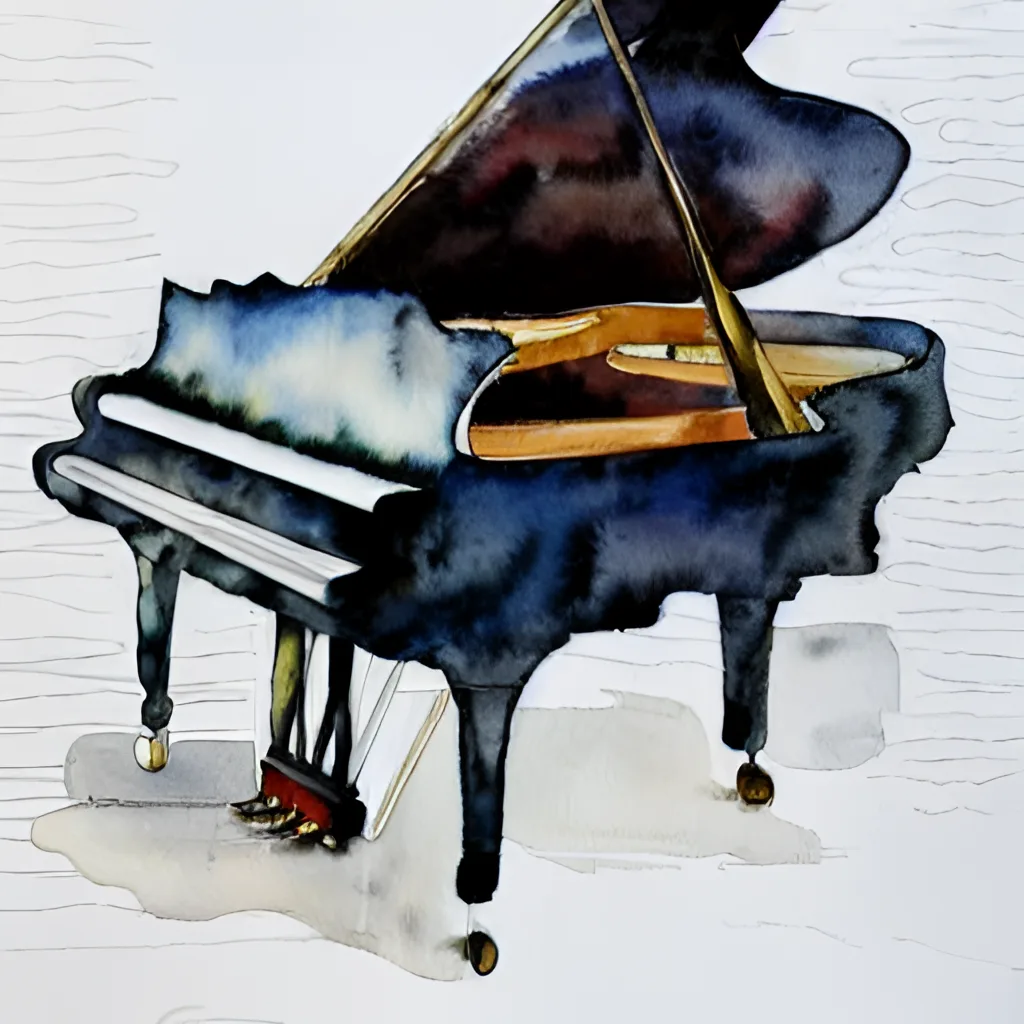
There is an Adagio in G minor, with a deep, slow melody, that is often called "Albinoni's Adagio", and many people assume it is the work of Albinoni, the eighteenth-century Venetian composer. In fact it was only published in 1958, by the Italian musicologist Giazotto. Giazotto said he had recomposed it from a fragment of an Albinoni manuscript, but that fragment has never been publicly found. Today most scholars believe the Adagio was mainly written by Giazotto himself. The story shows us that the name of a piece does not necessarily tell us its true origin.
Ask Your Teacher to Choose a Piano Version in a Lesson
The piano editions of this Adagio vary in difficulty, and which one suits your hands can be decided by looking through them together with Teacher Aum in a lesson.
Your teacher can also help you practise the singing quality of a slow melody and the steadiness of the bass.
This piece is very good for practising deep, lyrical expression.
Let the Melody Sing
The right-hand melody is slow and heartfelt, and should be played smoothly and with a singing quality.
Hold the long notes for their full value, listen to the sound fade slowly, and then move on to the next note.
You can imagine a violin drawing this melody out in long bows.

The Question of the Fragment
Later, researchers tried to find this fragment but never did.
The library has no record of holding anything of the kind either.
So most scholars believe the Adagio was mainly composed by Giazotto, who only borrowed Albinoni's name.
Albinoni's Adagio in Brief
Albinoni was born in 1671 and died in 1751, a Baroque composer from Venice. The Adagio in G minor is often called "Albinoni's Adagio", but it was published in 1958 by Giazotto, a musicologist who studied Albinoni, who claimed to have composed it from a manuscript fragment in the Dresden library.
That fragment has never been found, and the library has no record of holding it. Most scholars think it was mainly written by Giazotto. Its bass line resembles a Baroque basso continuo, but its mood is closer to a romanticised twentieth-century style, and it remains extremely popular.
You've read 31% of this article
Log in for free to read the remaining 69%
- Free to use
- No credit card needed
Plus, try Premium free for 7 days in the TIGA ALPHA app.
Continue with Google Sign up free Already a member? Log inOn the piano the left-hand bass should be steady and the right-hand melody should sing, and you can use it to practise control at slow tempos. When learning a piece it is worth looking up where it comes from, and you can ask Teacher Aum to help choose a piano version.
Keep the Bass Line Steady
When playing the piano version, the left-hand bass line should be steady and smooth, like slow footsteps.
The bass moves step by step downwards or upwards, supporting the melody above.
You can practise the bass line alone to become familiar with where it goes.
Use the Adagio to Practise Control at Slow Tempos
This Adagio is very slow, which makes it ideal for practising control at slow tempos.
At a slow tempo, the tone, dynamics and smoothness of every note are easier to hear.
Slow without dragging, deep without heaviness: that is the key to playing this piece well.
What to Call This Piece
Today many recordings and scores label it "Giazotto: Adagio in G minor" or "Albinoni/Giazotto".
This wording reflects its origin more accurately.
When we introduce this piece, we can also explain its true situation.
What We Can Learn from This Story
The story of "Albinoni's Adagio" tells us that the history of music is sometimes not as simple as a name makes it look.
When learning a piece, it is worth looking up where it comes from, and when and by whom it was written.
Understanding the real background gives us a more accurate understanding of the music.
G Minor with Two Flats in the Adagio
This Adagio is in G minor, with two flats: B♭ and E♭.
In the Baroque period G minor was often used to express sorrow and solemnity.
Before playing, you can first practise the G minor scale and its main chords.
Who Was Albinoni?
Albinoni was born in 1671 and died in 1751, a Baroque composer from Venice, Italy.
He wrote many concertos, sonatas and operas, and was quite famous in his day.
It is said that Bach also studied his works and wrote a keyboard fugue on his themes.
The 1958 Publication
In 1958 Giazotto published this Adagio in G minor, written for strings and organ.
He said that the piece was recomposed from a manuscript fragment which had only a bass line and a few bars of melody.
He claimed that the fragment came from a library in Dresden, Germany, whose music collection had suffered heavily in the Second World War.
Who Was Giazotto?
Giazotto was a twentieth-century Italian musicologist who had studied Albinoni's life and works.
He had compiled a catalogue of Albinoni's works and was an expert on this composer.
Precisely because of his standing as an expert, the Adagio he published was quickly accepted.
Why the Piece Is So Popular
Despite the doubts about its origin, this Adagio is still extremely popular.
Its deep, sorrowful melody is very moving, and it often appears in films, advertisements and all kinds of occasions.
From cello to guitar, from choir to solo piano, it has been arranged for almost everything.
Why It Sounds Like Baroque Music
This Adagio has a slowly walking bass line, much like the basso continuo of the Baroque period.
Its harmony and melody also have some Baroque stylistic features.
But listen closely, and its emotional expression and the rise and fall of the music are closer to a romanticised twentieth-century style.
Listen for
- G minor, with a deep, slow melody
- Published in 1958 by Giazotto
- Claimed to be composed from a fragment of an Albinoni manuscript
- Most scholars think it was mainly written by Giazotto himself
FAQ
Q: What key is this Adagio in?
A: G minor.
Q: In which year was it published?
A: 1958.
Q: Who published it?
A: The Italian musicologist Giazotto.
Q: Has the manuscript fragment been found?
A: It has never been found.
Q: What do scholars think of this piece?
A: Most believe it was mainly written by Giazotto himself.
Start Practising with TIGA ALPHA
TIGA ALPHA is an AI piano teaching app built by a team in Thailand. The app is available in 10 languages: Thai, English, Chinese, Arabic, Japanese, Russian, Spanish, French, Hindi and Korean. Its CEO, Teacher Aum, has 20 years of experience teaching piano, and that teaching background shapes every lesson. When you play, the app listens and tells you which notes or beats to practise next, so the feedback is specific rather than generic. Use it as an online piano lessons app for short daily sessions, follow it as a complete online piano course, or combine it with lessons from a teacher. Whether you are starting from scratch, coming back after a long break, learning music alongside your children or simply playing for fun, your next step stays clear. New users get a 7-day free Premium trial, then US$24.99 per month.
- Download and start: TIGA ALPHA
- In-person lessons in Thailand: TIGA Studio
- About the company: tigaalpha.com