The Double-Keyboard Piano: An Invention That Made Octaves Easier

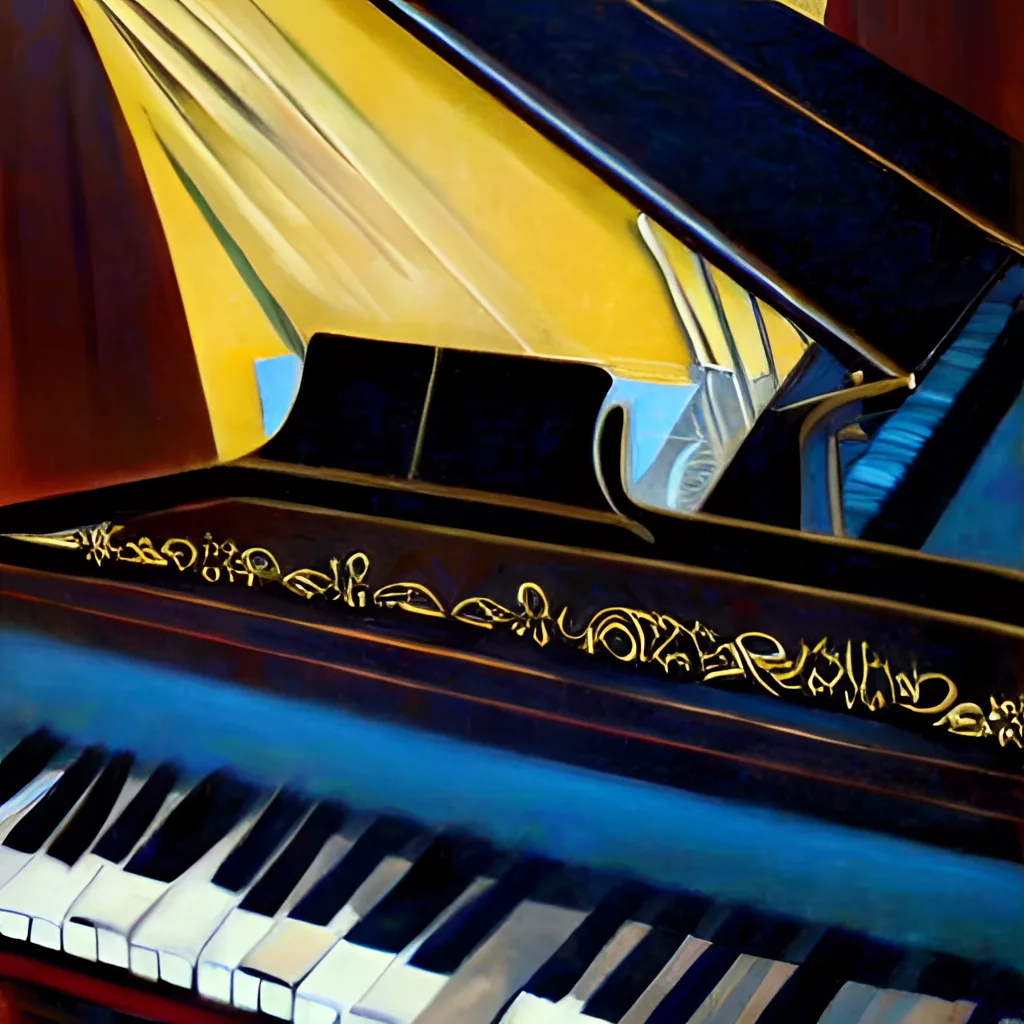
The double-keyboard piano was designed in the early twentieth century by the Hungarian composer and inventor Emanuel Moór. It has two rows of keys, one above the other. Each key in the upper row is an octave higher than the corresponding key in the lower row, and a mechanical coupling lets the fingers move freely between the two rows. As a result, an octave that would normally need an open hand can be played by moving lightly between the two keyboards, and the coupling can also make one key sound two notes an octave apart at once. The invention drew attention at the time but later became increasingly rare, and its story still has something to teach about instrument innovation today.
How it was designed
- The two rows of keys sit one above the other, with the upper row slightly higher and slightly further back
- The notes of the upper row are an octave higher than the corresponding notes in the lower row
- Both keyboards share the same strings and action
- A coupling mechanism can link the two octaves so that a single finger plays an octave
The player can use only the lower row, like an ordinary piano, or place the fingers between the two rows and play what would normally be very wide chords with only a small stretch of the hand.
What problem it tried to solve
The width of an octave on the piano is not easy for many people, especially players with small hands. In big chords and runs of octaves, as in Liszt or Rachmaninoff, the hand has to stay open for a long time, and it tires easily.
The idea behind the double keyboard was direct: if the hand cannot get bigger, "fold" the keyboard so that distant notes come closer to the fingers. This approach of starting from the player's body and reshaping the instrument to suit it is not common in the history of instruments.
Why it did not become widespread
High cost of learning
Players who had already learned the ordinary keyboard had to build a new sense of position between two rows of keys, which took a great deal of time.
You've read 31% of this article
Log in for free to read the remaining 69%
- Free to use
- No credit card needed
Plus, try Premium free for 7 days in the TIGA ALPHA app.
Continue with Google Sign up free Already a member? Log inRepertoire and teaching system
The scores, textbooks and teachers of the time were all designed for a single keyboard, so the new instrument lacked a matching teaching method.
Complex and expensive to make
Two rows of keys and a coupling mechanism made it harder to build and to repair.
Musical habits are hard to change
The piano already had a stable performing tradition, and most people preferred to adapt to the existing keyboard through practice.
What it teaches us today
Although the double-keyboard piano never became mainstream, it raised a question that is still important: can an instrument adapt better to the learner, instead of only making the learner adapt to the instrument?
Today the question appears in different forms. A digital piano can adjust its touch, a digital keyboard can transpose at the press of a button, and a piano learning app can slow down a demonstration to your speed, let you practise hands separately and mark wrong notes. These tools do not change the structure of the piano itself, but they make the process of learning fit each person's situation more closely.
- Break the difficulty apart: one hand first, then both hands
- Bring the speed down: accurate and slow first, then gradually faster
- Make feedback timely: know where to practise more as soon as you finish playing
A design approach that starts from the player's body
The most interesting thing about the double-keyboard piano is not its mechanism but its starting point. Most improvements to instruments focus on a better tone, a bigger sound and greater durability, while this one focused on whether "the human hand can be more at ease". This player-centred way of thinking can later be seen in many fields, such as height-adjustable piano benches, smaller instruments for beginners and graded teaching materials designed for beginners.
For people learning the piano, the same approach applies. Instead of complaining that a passage is too hard, first ask yourself: could I use a different fingering? Could I break the chord into an arpeggio and practise that first? Could I halve the speed? Many problems that seem like "my hands are not big enough" can in fact be solved step by step by adjusting your method.
What you gain from reading a bit of instrument history
Learning how instruments developed helps you see that today's piano was not always the way it is now. It went through countless attempts and improvements. Some succeeded and stayed, and some, like the double keyboard, gradually faded away. This view gives learners a deeper understanding of the instrument, and makes them more willing to try new learning tools.
FAQ
Q: Can you still see a double-keyboard piano today?
A: Very few survive, and they are generally seen only in museums or collections. You will not use one in everyday learning.
Q: Is the piano suitable for people with small hands?
A: Yes. You can choose pieces and arrangements that suit your hand, and with relaxed wrist movement you can widen your reach slowly.
Q: Is the octave coupler on a digital piano the same thing?
A: The principle is different, but the idea is similar: one key sounds several notes, mainly for tonal effect.
Q: What practical meaning does this invention have for learning the piano?
A: It reminds us that when we meet difficulty, we can adjust our methods and tools instead of just gritting our teeth.
Practise by breaking difficulties apart
If you want to practise octaves and chords in a way that fits your own situation, try TIGA ALPHA.
TIGA ALPHA is an AI piano teaching app built by a team in Thailand. The app is available in 10 languages: Thai, English, Chinese, Arabic, Japanese, Russian, Spanish, French, Hindi and Korean. Its CEO, Teacher Aum, has 20 years of experience teaching piano, and that teaching background shapes every lesson. When you play, the app listens and tells you which notes or beats to practise next, so the feedback is specific rather than generic. Use it as an online piano lessons app for short daily sessions, follow it as a complete online piano course, or combine it with lessons from a teacher. Whether you are starting from scratch, coming back after a long break, learning music alongside your children or simply playing for fun, your next step stays clear. New users get a 7-day free Premium trial, then US$24.99 per month.
- Download and start: TIGA ALPHA
- In-person lessons in Thailand: TIGA Studio
- About the company: tigaalpha.com