Metal Frames and Cross-Stringing: How Pianos Bear More Tension
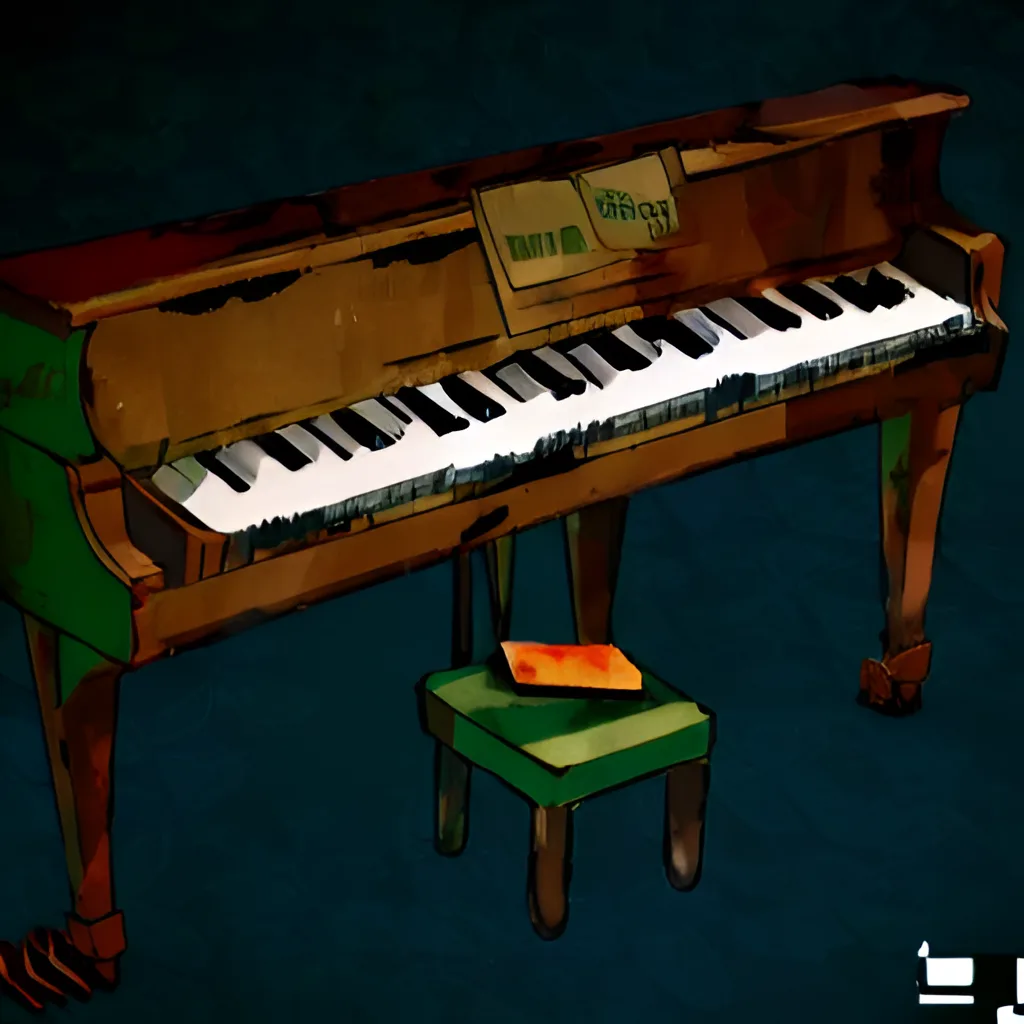
As the nineteenth century brought a growing demand for pianos that were louder, steadier and could be heard in larger rooms, the strings were pulled tighter, and were often longer and thicker too. A wooden case gradually found it hard to bear such tension alone, so metal frames or braces began to be used inside, spreading the pull of the strings onto a stronger structure. At the same time, many makers also adopted cross-stringing: letting the lower strings run diagonally over the top of the other strings, so that a longer vibrating length is gained within a limited case. These two developments are often discussed together because they answer the same question: how to make a piano sound fuller and steadier without increasing its size endlessly. Learning about them is not meant to help you remember who invented what, but to understand why the inside of today's common piano looks like a small bridge. When a learner opens the lid of a modern piano, they can first recognise that metal skeleton, and then imagine how great the pull on the strings is. This article talks only about changes in structure and in how things sound; it does not name any manufacturer, nor present any one maker's approach as an unchangeable standard.
Work Backwards from Sound to Structure with Teacher Aum in Lessons
In a lesson, you can ask Teacher Aum to listen with you to the depth and sustain of the bass, and discuss how this relates to the structure of the modern piano.
If an early piece sounds too full on today's piano, you can also ask the teacher to help you find a more restrained way to play it.
From the frame and cross-stringing, practise linking the sound you hear with the changes inside the instrument.
What Problem Does Cross-Stringing Solve
If all the strings ran parallel, the case would have to be very long for the bass to reach enough length.
Letting the bass strings run diagonally over the others keeps a longer vibrating length within a relatively compact shape.
You've read 30% of this article
Log in for free to read the remaining 70%
- Free to use
- No credit card needed
Plus, try Premium free for 7 days in the TIGA ALPHA app.
Continue with Google Sign up free Already a member? Log inIn terms of sound, this has a direct bearing on whether the bass can be rich, and whether it can balance with the middle and high registers.
A common misunderstanding
- In the nineteenth century pianos gradually adopted metal frames to bear greater tension
- Cross-stringing gives the lower strings a longer vibrating length in limited space
- Both aim to make the sound fuller and steadier without greatly increasing size
- Knowing the structure helps explain why the inside of today's piano looks like a small bridge
What to Remember About These Two Structures
The metal frame bears the greater string tension, while cross-stringing gives the bass a longer vibrating length in limited space.
Both are meant to give the piano a fuller, steadier sound without making it endlessly larger.
When we play a modern piano today, we are in fact working together with these later-added structures.

Seeing the Inside Makes It Easier to Remember
If you get the chance, under the guidance of your teacher or a piano tuner, to take a look inside, first recognising the frame and the direction in which the bass strings cross will stay in your memory better than just memorising terms.
There is no need to take the piano apart, and do not touch the parts inside yourself.
After looking once, going back to the score and talking about sound is often more concrete.
What the Metal Frame Does
The frame or brace bears the pull of the strings, so that the case is less easily pulled out of shape.
In this way tuning can be steadier, and makers are better able to use stronger strings.
Open a piano today and you can often see this layer of metal skeleton; it is not decoration, but part of the structure.
Why Tension Increased
People wanted a louder sound that could hold its own in larger spaces, and also a wider range and a steadier resonance.
To achieve these, strings often had to be pulled tighter, and sometimes made longer.
Once tension rises, a wooden structure alone is easily deformed, which can even affect the stability of the tuning.
A Compromise Between Size and Sound
A piano cannot grow without limit, especially as it has to fit into homes or mid-sized halls.
The frame and cross-stringing both seek a stronger, steadier sound within limited space.
So the common shape we see today is in fact the result of a series of structural compromises.
What This Means for the Player
You do not need to be a maker to understand from this why modern pianos are often louder and steadier than early instruments.
When playing early works, if you feel today's sound is too big, part of the reason is that these later structures support the energy more firmly.
Slow down
Controlling the volume is sometimes a matter of cooperating with an instrument designed to produce a very large sound.
FAQ
Q: What problem does the metal frame mainly solve?
A: It bears the greater string tension, reduces deformation of the case, and makes the sound and tuning steadier.
Q: What does cross-stringing mean?
A: Letting the lower strings run diagonally over the top of the other strings, so that a longer vibrating length is kept within a limited case.
Q: Why are these two things often discussed together?
A: Both answer the question of how to make a piano louder and steadier without much increase in size.
Q: How does knowing these structures help with playing early works?
A: It helps you understand why modern pianos are often louder, so you can control volume more consciously.
Q: Can I open a piano and touch the parts inside myself?
A: No. If you want to look, do so under the guidance of someone experienced, and do not touch anything yourself.
Start practising with TIGA ALPHA
TIGA ALPHA is an AI piano teaching app built by a team in Thailand. The app is available in 10 languages: Thai, English, Chinese, Arabic, Japanese, Russian, Spanish, French, Hindi and Korean. Its CEO, Teacher Aum, has 20 years of experience teaching piano, and that teaching background shapes every lesson. When you play, the app listens and tells you which notes or beats to practise next, so the feedback is specific rather than generic. Use it as an online piano lessons app for short daily sessions, follow it as a complete online piano course, or combine it with lessons from a teacher. Whether you are starting from scratch, coming back after a long break, learning music alongside your children or simply playing for fun, your next step stays clear. New users get a 7-day free Premium trial, then US$24.99 per month.
- Download and start: TIGA ALPHA
- In-person lessons in Thailand: TIGA Studio
- About the company: tigaalpha.com