Player Pianos: From Punched Paper Rolls to Digital Recording

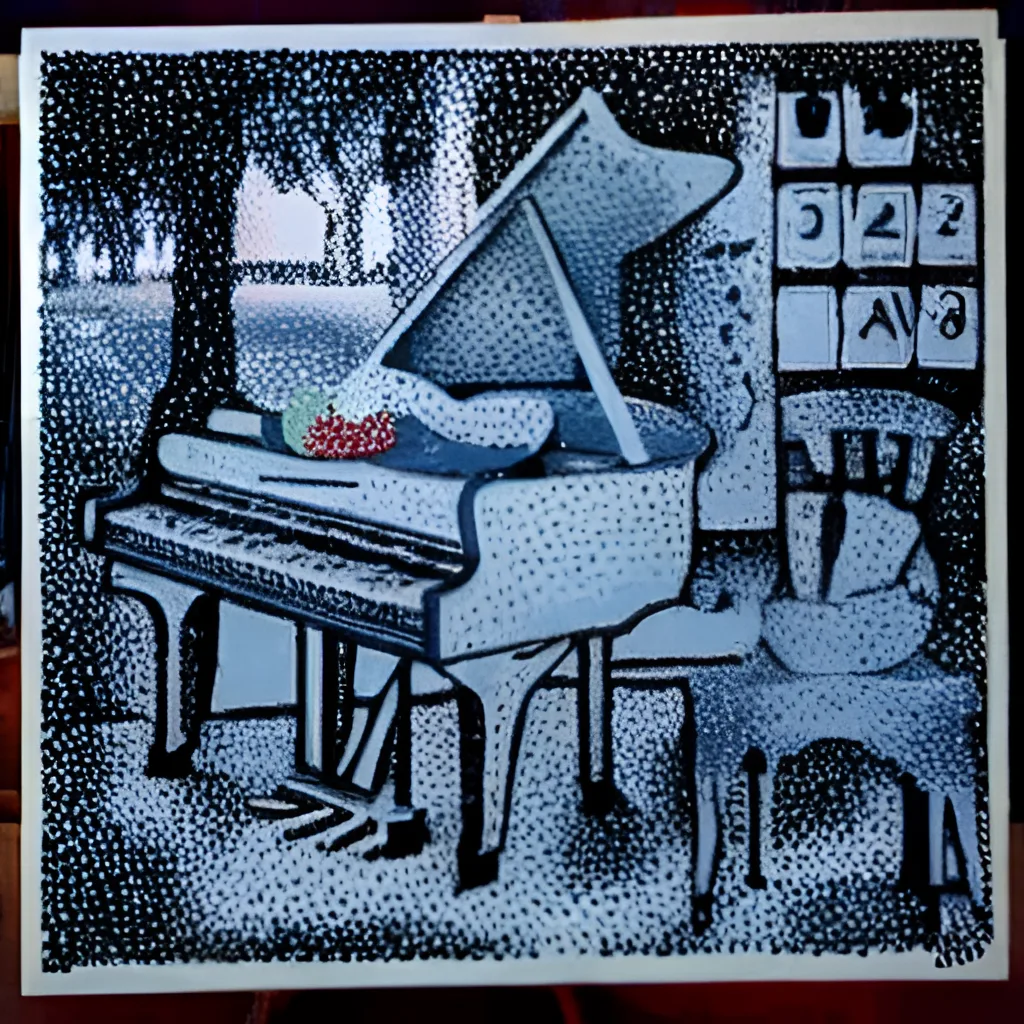
A player piano is a piano that can play music by itself, with nobody sitting at the keyboard. In the early twentieth century it was hugely popular in homes in Europe and America: you loaded a roll of paper full of small holes into the piano, pumped the pedals or switched on an electric motor, and air passing through the holes pushed on the pneumatic mechanism inside the piano, so that the keys went down one by one and the music sounded. The position of each hole on the roll stood for a note, and the length of the hole stood for how long the note lasted. In an age before the gramophone and the radio were widespread, this was almost one of the few ways to hear "human-quality" piano playing at home. Today the same idea lives on in digital form: sensors record the playing, an electronic mechanism reproduces it, and the logic behind it is strikingly similar to the paper rolls of a century ago.
How a Paper Roll "Remembers" Music
A paper roll is like a very long piece of sheet music, except that it is written not for people to read but for a machine. The roll moves from top to bottom; the position across its width corresponds to the keys, and the length along it corresponds to time. Each time the machine reads a hole, the matching key goes down; when the hole ends, the key is released. Early rolls were mostly punched by craftsmen working from the score, and later methods appeared that could record a pianist's real performance, preserving even subtle changes of tempo and dynamics. These were called reproducing pianos.
A Preserved History of Sound
- Many composers and pianists recorded rolls for the player piano, leaving valuable records of their playing
- These rolls let later generations "hear" performance styles from the time when recording technology was still immature
- Some composers even wrote specially for the player piano, using the machine's ability to play dense passages no human hands could manage
- As the gramophone and radio became widespread, the player piano gradually left ordinary homes
You've read 32% of this article
Log in for free to read the remaining 68%
- Free to use
- No credit card needed
Plus, try Premium free for 7 days in the TIGA ALPHA app.
Continue with Google Sign up free Already a member? Log inToday researchers and enthusiasts still restore old pianos and old rolls, and scan the rolls into digital files so that these sounds continue to be passed on.
From Paper Rolls to Digital Files
A change in how music is recorded
A paper roll records notes by the position and length of holes; modern systems use sensors to record when each key goes down, how fast, and when it is released, and store it as a digital file.
A change in how it is reproduced
The pneumatic mechanism has been replaced by electromagnetic drivers, which can control the force of each key more precisely.
A change in use
In the past it was mainly home entertainment; now it is also used for teaching demonstrations, remote performance and music research.
What It Teaches Piano Learners
The player piano tells us something important: a performance can be broken down into a few elements, namely which note, when, how loud and how long. If you can take apart your own playing in this way, it becomes easier to find problems. For example, record a piece of practice and, as you listen back, pay attention to just one element: only the rhythm, or only the dynamics, or only how long the notes last. Focusing on one element at a time is far more useful than a vague feeling that "I played badly".
If a Machine Can Play, Why Should People Learn?
Some people ask: if a machine can repeat a performance perfectly, what is the point of learning the piano? The answer is that music is not only about "pressing the right keys". When playing, a performer adjusts expression to mood, occasion and audience, and every time is a little different; that is exactly what makes live music moving. Besides, the concentration, patience and sense of achievement that come from learning are things no machine can gain on your behalf. A player piano can be a good teacher and companion, but the person sitting at the keyboard is still the true star of the music.
Try "Paper Roll Thinking" at Home
Take a sheet of squared paper and write the eight note names from C to C across the top, with each square down the page standing for one beat. With a pencil, fill in the first two phrases of "Twinkle, Twinkle, Little Star" as small blocks, as long as each note lasts. Once you have finished, look at this "paper roll" as you play it on the piano, and you will feel directly how rhythm and pitch are recorded.
Conclusion
From paper rolls to digital files, the technology has kept changing, but people's wish to hold on to music has not.
Frequently Asked Questions
Q: Are player pianos still made?
A: Traditional paper-roll types are now rarely made, but modern pianos with digital self-playing features still exist.
Q: Can old paper rolls still be played?
A: Well-preserved rolls can still be played on restored player pianos, and some people have scanned them into digital files.
Q: Can a player piano help with learning?
A: It can demonstrate how a piece is played and let learners watch the movement of the keys, but you still need to practise with your own hands.
Q: Can paper rolls record the pedals?
A: Some more advanced roll systems can record pedal movements, making the reproduced performance closer to the original.
Let Your Own Playing Be "Recorded" Too
To break down your own playing the way a player piano does, try TIGA ALPHA.
TIGA ALPHA is an AI piano teaching app built by a team in Thailand. The app is available in 10 languages: Thai, English, Chinese, Arabic, Japanese, Russian, Spanish, French, Hindi and Korean. Its CEO, Teacher Aum, has 20 years of experience teaching piano, and that teaching background shapes every lesson. When you play, the app listens and tells you which notes or beats to practise next, so the feedback is specific rather than generic. Use it as an online piano lessons app for short daily sessions, follow it as a complete online piano course, or combine it with lessons from a teacher. Whether you are starting from scratch, coming back after a long break, learning music alongside your children or simply playing for fun, your next step stays clear. New users get a 7-day free Premium trial, then US$24.99 per month.
- Download and start: TIGA ALPHA
- In-person lessons in Thailand: TIGA Studio
- About the company: tigaalpha.com